Skip to content
24/7 emergency07361 511775

St Albans City and District · AL1 AL2 AL3 AL4

Pest control in St Albans

Day to day, pest control in St Albans means rats working the River Ver and mice in the Victorian terraces of Fleetville.

The short answer

St Albans pest control at a glance

The council no longer runs pest control in St Albans, so rats off the River Ver and mice in Victorian terraces now fall to private firms. Sean covers the whole city from our office on Mercers Row, with a free inspection first and treatment from £90. Work carries a guarantee lasting at least three months, same-day visits run subject to seasonal availability, and a 24/7 number handles emergencies.

Information last reviewed by Sean Kennell.

Key facts

Treatments
From £90, quoted in writing
Inspection
Free, before any work
Guarantee
At least three months on every treatment
Response
Same-day visits, subject to availability
Emergencies
24/7 on 07361 511775
Your technician
Sean Kennell
Postcodes
AL1, AL2, AL3, AL4
Payment
Cash, Bank transfer, Card
Standards
NPTA · RSPH Level 2 minimum

Your local technician

Sean Kennell

Covers St Albans and the surrounding villages

NPTA · RSPH Level 2 Award in Pest Management

Who turns up

Meet Sean, who covers St Albans

He spends much of his week in the terraces of Fleetville, The Camp and Sopwell, where mice run the floor voids between houses, and in gardens backing onto Verulamium Park, where rats come up from the Ver banks. Around Clarence Park and Verulam Road the calls tend to be squirrels in deep Victorian lofts. Before baiting for rats he opens the closest manhole cover to check for a broken drain, and on the older terraces he meshes airbricks before he leaves. Works to NPTA standards; RSPH Level 2 Award in Pest Management.

How booking works

  1. 1

    Tell us what you've seen

    Call 01727 400025 and describe the problem — Sean covers this area.

  2. 2

    Free inspection and written quote

    The property is inspected, the pest identified and the price agreed in writing before any work begins.

  3. 3

    Treatment and written record

    The treatment is carried out and you're left a record of what was found, what was done and what to fix.

Local conditions

Why St Albans gets the pests it does

Three things drive the pest work in St Albans. A chalk river feeding silted park lakes. Streets of timber-framed, Georgian and Victorian buildings full of voids. And a market that puts food on the pavement twice a week.

01

The Ver and its lakes

Verulamium Park's ornamental lakes were dug in the 1930s and are fed by the Ver, and the council is blunt about them: far too large for the flow they get, and clogged with silt. Slow water, soft banks and food dropped for the Canada geese give brown rats an easy living. Gardens backing onto the park notice it first. The lake restoration, with a contractor due this autumn, will disturb those banks, and disturbed rats move.
02

Old houses leak mice

St Albans has 26 conservation areas within the city. Timber-framed Tudor houses sit beside Georgian townhouses around St Michael's and Fishpool Street, and long late-Victorian rows fill Fleetville and The Camp. Old buildings move. Mortar softens, suspended floors leave a void under every room, and a mouse needs a gap of only about 6mm. In a terrace those voids run behind shared walls, so a problem at number 12 is usually a problem at 10 and 14 as well.

03

Wednesday and Saturday stalls

The Charter Market, whose rights go back to Edward VI's letters patent of 1553, still fills St Peter's Street every Wednesday and Saturday: around 165 traders along roughly 485 metres of road. A farmers' market follows on the second Sunday of each month. That is a lot of food handled in the open, and pigeons and rats learn timetables fast. Behind the stalls, cafés and pubs trade from centuries-old buildings where one broken drain feeds a whole block.

On the record

The local facts behind this page

Every line links to where it was published, so you can check it.

  1. 1

    The district council can investigate a neighbouring garden where household waste gives rats and mice food or nesting cover, while blocked shared sewers are reported to Thames Water instead.

    St Albans City and District Council · 2026-09-29

  2. 2

    The council reports that Verulamium Park's 1930s ornamental lakes are oversized for the Ver's flow and choked with silt, with a design-and-build contractor due to be appointed in autumn 2026.

    St Albans City and District Council · 2026-03

  3. 3

    The Rats' Castle pub at the corner of Hatfield Road and Sutton Road in Fleetville took its name from a thatched toll house overrun by rats in the 1870s, and has been renamed The Old Toll House.

    St Albans' Own East End · 2025-06-19

Postcode by postcode

Street by street: what we get called to

AL1

AL1 takes in the centre and the streets east and south of it: St Peter's Street and the market, Fleetville along Hatfield Road, The Camp, Sopwell, Cottonmill and the villas around Clarence Park. Much of it is late-Victorian and Edwardian terracing on suspended timber floors. Our AL1 calls are mostly mice in those floor voids, rats from old shared drains behind the rows, and pigeons or rodents at cafés and shops near the market.

AL2

AL2 is the southern end of the district: Chiswell Green, Park Street, Frogmore, Bricket Wood, London Colney and Napsbury Park, the estate laid out in the grounds of the old hospital. Expect suburban semis, bungalows and newer estates, many with long gardens meeting fields, woodland or the Ver on its way south. Work in AL2 leans towards rats under sheds and decking, mice coming in off open land each autumn, and wasps in garden outbuildings.

AL3

AL3 covers the west and north of the city: St Michael's and Fishpool Street beside Verulamium Park, Verulam Road, Bernards Heath, Batchwood and New Greens, then out to Redbourn and the Porters Wood industrial estate. Housing runs from timber-framed and Georgian houses to Edwardian villas and post-war estates. In AL3 we are called most for rats along the Ver and the park lakes, squirrels in big lofts, and wasps under soffits in summer.

AL4

AL4 runs east and north-east: Marshalswick and its shops at The Quadrant, Jersey Farm, Oaklands, Sandridge, Smallford, Colney Heath and Wheathampstead. Marshalswick's semis date from the 1930s to the 1950s, while Jersey Farm went up from the 1970s. Most AL4 visits are for mice slipping in where pipes and cables pass through walls, squirrels in lofts near the tree-lined edges of the estates, and rats where back gardens meet farmland.

Most common locally

Pests we treat in St Albans

Plate 01Rodents
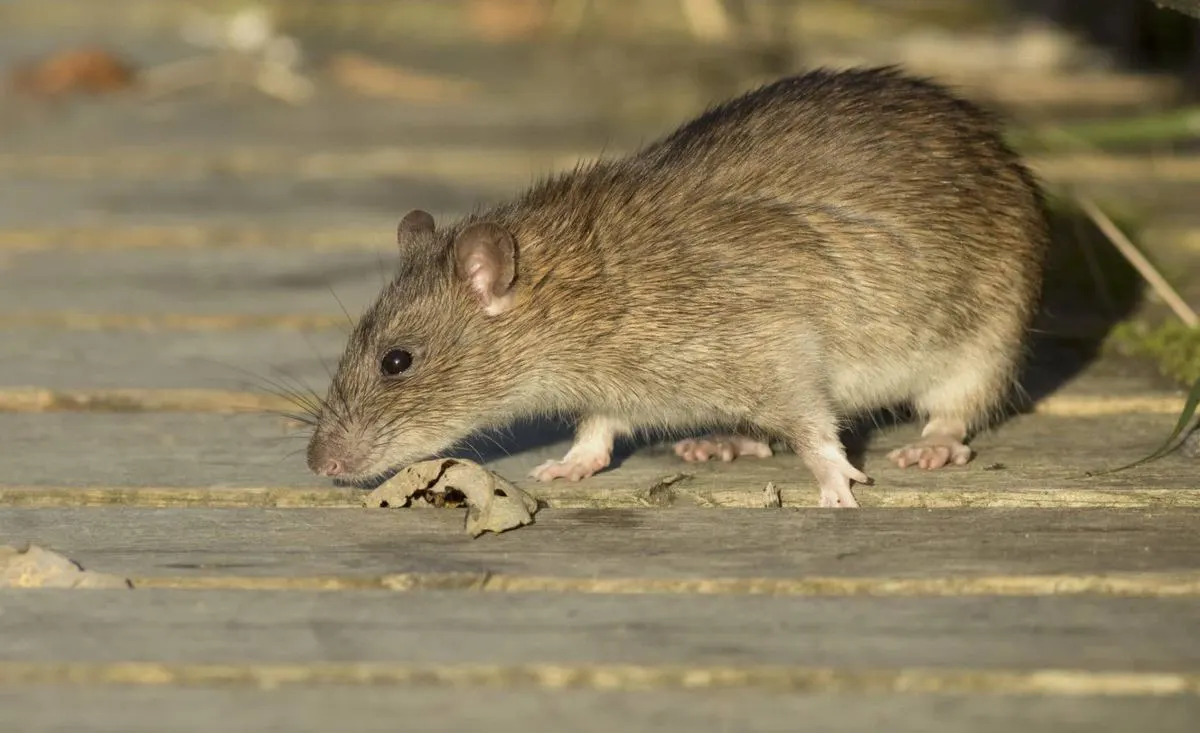
Adult brown rat with grey-brown fur, blunt snout, small ears and thick scaly tail crouched on garden decking

Brown rat

Rattus norvegicus

Fleetville had a pub called the Rats' Castle, on the corner of Hatfield Road and Sutton Road, named after a tumbledown thatched toll house on the site with rats nesting in its roof. It was renamed The Old Toll House in 2025. The rats ignored the new sign. Today they run the Ver banks, cracked Victorian drain runs and the bin bags put out before the 5am collection start.

Rat control in St Albans
Plate 02Rodents
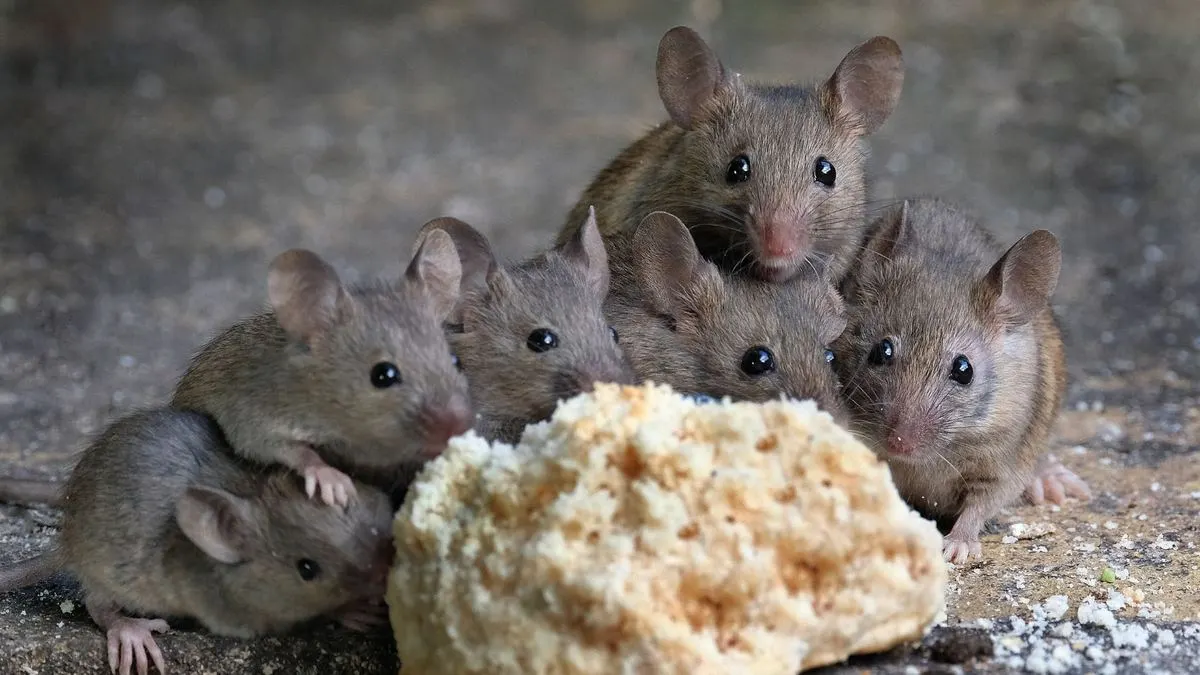
House mouse with grey-brown fur, large rounded ears, pointed snout and long scaly tail

House mouse

Mus musculus

Marshalswick grew from the 1920s onwards, with a big 1950s estate on old farmland, and those semis let mice in where pipes and cables pass through the wall or under a tired garage door. Jersey Farm's 1970s houses are tighter, so there the culprit tends to be a cracked airbrick or a boxed-in soil pipe. Bait alone just buys time. Seal the gap.

Identification guide
Plate 03Stinging insects
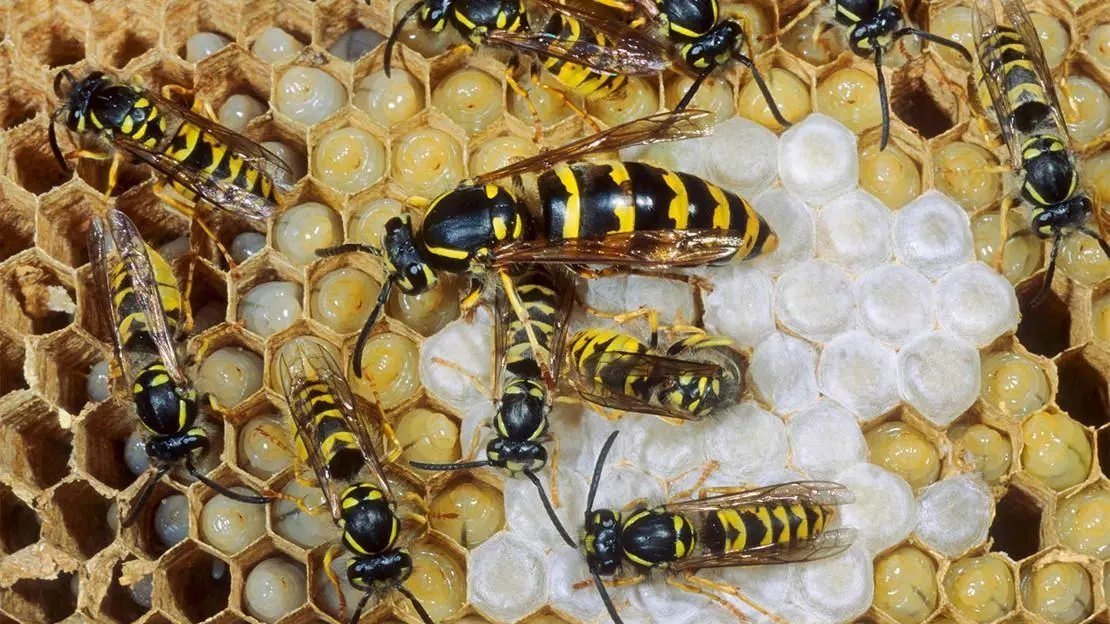
Yellow-and-black common wasps on the exposed comb of a paper nest, with hexagonal cells holding white larvae

Common wasp

Vespula vulgaris

Nests go into soffit gaps on the Edwardian houses of Bernards Heath and Townsend, into compost bins, and into dry banks along the Nickey Line path. By August a colony is at full strength and the fruit stalls on market days pull in foragers. We treat at the entrance hole, so there is almost never a reason to lift tiles or open a roof.

Identification guide
Plate 10Wildlife
Fig. 10

Sciurus

carolinensis

Body 24–28.5 cm

Grey squirrel

Sciurus carolinensis

The large Victorian and Edwardian villas around Clarence Park and Verulam Road have deep lofts with tall trees close by, which is exactly what a grey squirrel wants. You usually hear them before you see anything: scrabbling above the ceiling at first light. They chew cable, joists and whatever is boxed up in storage, so we remove them, then mesh the entry point in galvanised steel.

Identification guide
Plate 12Birds
Fig. 12

Columba

livia

31–34 cm long

Feral pigeon

Columba livia domestica

The Clock Tower has stood over the market since it was built between 1403 and 1412, and pigeons treat its stonework and the shop parapets nearby as home. Fouling on an old frontage is a cleaning bill and a slip risk on the pavement. In a conservation area netting and spikes need to be discreet, so fixings are planned around how the building looks from the street.

Identification guide
Plate 04Biting insects
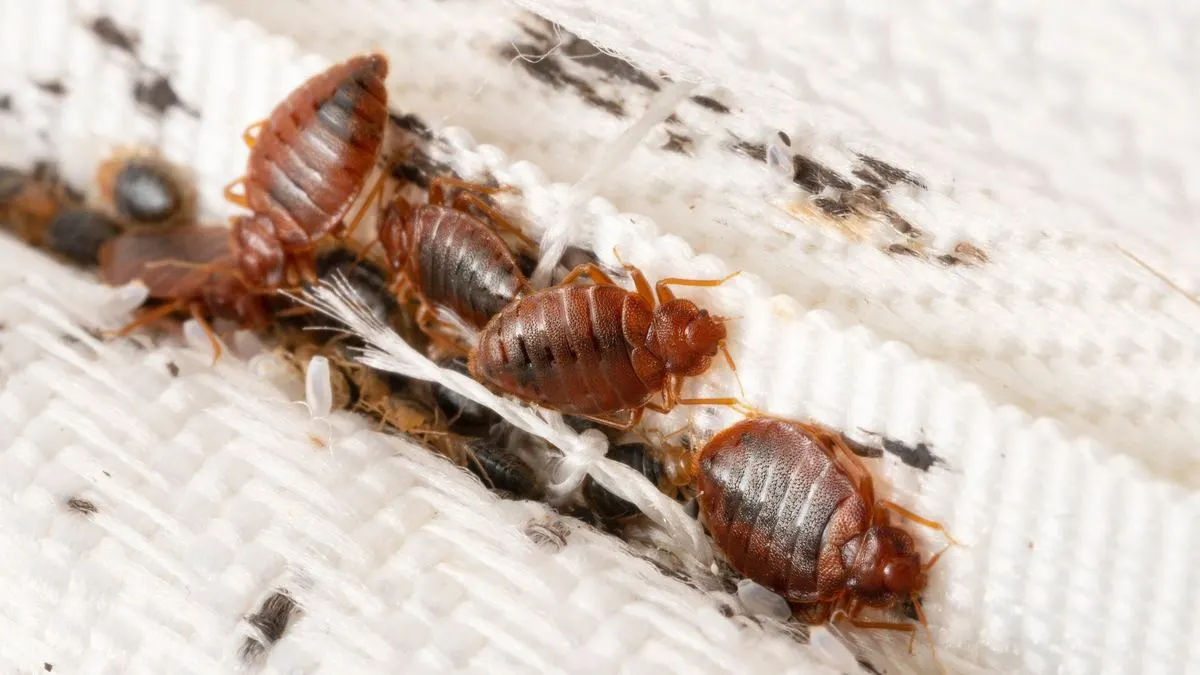
Reddish-brown adult bed bugs and paler nymphs clustered in the stitched seam of a mattress

Bed bug

Cimex lectularius

St Albans City station puts Thameslink trains to St Pancras, Luton and Bedford on the doorstep, and bed bugs travel in luggage, not dirt. Commuters, weekend visitors and people renting rooms near the station all carry that risk. Tiny dark spots along a mattress seam are the giveaway. One visit rarely finishes them, so we inspect the whole room, treat, then come back to check.

Identification guide

Edible dormouse (glis glis)

Glis glis can turn up here. The Mammal Society puts most of them within about 35km of Tring in the Chilterns, and St Albans sits inside that range. They sleep through winter and get loud in lofts from early summer: thumping, gnawing, droppings bigger than a mouse's. Trapping them is restricted by law, so call before setting anything yourself.

What it costs

From £90

Quoted in writing after a free inspection, so the figure is agreed before any work begins. Paid by cash, bank transfer, card.

What moves the price

  • The pest, and how established the activity is
  • Size and layout of the property — loft, cellar, outbuildings
  • How many visits the treatment needs to finish the job
  • Proofing work: sealing entry points, mesh, drain guards
  • Access — height for wasp nests, confined spaces, out-of-hours

St Albans City and District Council

Does the council deal with pests in St Albans?

No council service

No. St Albans City and District Council has closed its pest control service, and its website directs people to private contractors instead. It keeps legal powers over rats and mice, treating its own land and serving notices on owners where needed. For a home or business that means booking privately. We offer a free inspection, a three-month minimum guarantee and your technician's own number.

Source: St Albans City and District Council · checked 29 September 2026

Private treatment, from £90.

Free inspection first, a written quote, no eligibility rules, and a guarantee of at least three months.

Homes · lettings · commercial

Homes, landlords and businesses

01

Homes

Much of the housing in St Albans is old: Tudor timber in St Michael's, bay-fronted villas near Clarence Park, Fleetville terraces with original suspended floors. We find the gap first and treat second, and we use proofing that suits the building, such as lime mortar and fine steel mesh, rather than a can of foam that fails in a year and looks wrong on a listed wall.

02

Landlords & lettings

A Victorian terrace in The Camp and a 1950s house in Sopwell or New Barnes let with very different weak spots. When a tenant reports scratching, the fix is usually in the building, not the kitchen. You're left a dated report that shows where they got in, what was used and which repairs are still outstanding, which is exactly what you want on file if a dispute ever starts.

03

Food & commercial

Market traders, cafés off St Peter's Street and the pubs by Verulamium Park all share the same problem: food, old cellars and neighbours whose bins you can't control. We work before opening or after close, keep a treatment log you can hand straight to an EHO, and look at the whole block's drains and waste points, not just your unit.

How a visit works

  1. 01

    Inspect

    Species, scale, the way in and what's feeding it.

  2. 02

    Quote

    A written price before work starts — from £90.

  3. 03

    Treat

    The least-toxic method that will finish the job.

  4. 04

    Proof

    Entry points sealed; guaranteed for at least three months.

Through the year

When pests peak in St Albans

  1. Spring (Mar–May)

    Wasp queens, ants

    Queens leave sheds and lofts and start paper nests no bigger than a golf ball. Spot one on a Marshalswick garage wall in April and it is a two-minute job, not a July emergency.

  2. Summer (Jun–Aug)

    Wasps, rats near the lakes, glis glis

    Goose fouling on the Verulamium lakes is worst now and the park is at its busiest, so dropped food piles up by the water. Glis glis wake in the lofts, and wasp nests peak.

  3. Autumn (Sep–Nov)

    Mice, rats, grey squirrels

    The first cold nights push mice into the floor voids of Fleetville and The Camp. Squirrels stash food and scout lofts, and the lake restoration will stir up rats along the Ver.

  4. Winter (Dec–Feb)

    Rats, mice, bed bugs

    Rodents are settled indoors by now, so droppings in the airing cupboard mean act this week. With wasps gone, it is the right season to proof an old roof or cellar properly.

Questions

St Albans pest control questions

Not answered here? Call Sean on 01727 400025.

Does the council do pest control in St Albans?

No. The district council closed its pest control service and now points residents to private contractors. It still clears rats and mice from its own land, and it can look into a neighbouring garden where household waste is feeding or sheltering rodents. It will not treat inside your home, and it cannot make a neighbour tidy an overgrown garden. We start with a free inspection.

How much does it cost to get rid of rats or mice in St Albans?

Rodent work here is quoted from £90, with no charge for our first look round the property. What you end up paying turns on how settled the rats or mice are, the number of visits, and how much proofing an old house needs. You get the price before any work starts, and every job carries a guarantee lasting at least three months.

I rent and there are mice. Does my landlord have to pay?

Usually the landlord, when pests get in through the building itself, such as a broken drain or gaps in old brickwork. Tenants tend to pay where the problem arrived with them, like bed bugs in luggage or fleas from a pet. In the older terraces of Fleetville and Sopwell the entry point is often structural, and the tenancy agreement settles the grey areas.

What time of year do mice move into Fleetville and Sopwell houses?

Mostly between late September and November, once chilly evenings drive them indoors after warmth. In the late-Victorian terraces the suspended floors give them a run from one house to the next, so scratching under the boards often starts in several homes at once. Rats follow a similar pattern. Proofing airbricks and pipe gaps before October saves a winter of baiting.

My garden backs onto Verulamium Park. Will I get rats?

You are more exposed than most, but it is not a given. Rats live along the Ver and around the lakes on the west side of St Albans, and they visit gardens with compost heaps, bird feeders or gaps under sheds. Take feeders in at night, lift anything sitting on bare soil and call us if you see runs or burrows along the fence line.

Can glis glis get into houses in St Albans?

Yes, they can. The edible dormouse lives mostly within about 35km of Tring, which takes in this district, and it likes lofts in occupied houses. Heavy thumps overhead at night from June onwards, with droppings larger than a mouse's, are the sign. Trapping them is restricted by law, so leave it to a trained technician.

Can you proof a listed or conservation-area house without damaging it?

Yes. Most proofing is small and reversible: mesh behind an airbrick, a brush strip on a door, steel wool and lime mortar in a gap. If a fix would alter the fabric of a listed building we tell you first, so you can check with the council's planning team before anything is fixed in place.

Which qualifications should a pest firm near the Abbey be able to show?

Start by checking that whoever visits holds an RSPH Level 2 qualification, the usual entry standard for the trade, and that the firm belongs to the NPTA or BPCA. Get the quote on paper before work begins, along with a written guarantee spelling out its length. You should know the technician by name, see a genuine street address and find recent customer reviews. A quote given over the phone for an unseen house is a warning sign, since nobody can price proofing they have not looked at.

How quickly can someone get to me?

Frequently on the day you ring, though busy seasons can push that back, because we work from 41 Mercers Row in the middle of town and most streets are a short drive. August wasp nests and the first cold weeks of autumn are the busiest spells, so ringing early in the day gives the best chance of a visit before evening.

Which pest problems justify an out-of-hours call?

Ring the 24/7 line when someone could get hurt tonight or a kitchen cannot be used until morning. A wasp colony pouring out beside the only way into the house, a rat on the worktop, or mice in a café the night before service all qualify. Scratching behind a skirting board or droppings spotted up among the joists can wait for daylight, and we will tell you so honestly on the phone.

Coverage

Areas we cover around St Albans

Postcodes AL1, AL2, AL3, AL4, plus the villages nearby. Elsewhere in Hertfordshire? See pest control across Hertfordshire or every area we cover.

Neighbourhoods

  • Fleetville
  • The Camp
  • Marshalswick
  • Jersey Farm
  • Bernards Heath
  • Townsend
  • Sopwell
  • Cottonmill
  • St Michael's
  • St Stephens
  • New Greens
  • Batchwood
  • Clarence Park
  • Cell Barnes
  • Hill End
  • Chiswell Green

Nearby towns and villages

Free inspection · from £90

Book Sean for a free inspection

The council no longer treats pests in St Albans, so ring us. Tell us the street and what you are hearing or finding, and your technician will tell you on the call whether it sounds like rats, mice, squirrels or glis glis.