How to identify a cat flea
- 1–3 mm long, glossy reddish-brown to almost black, and flattened side to side so it slips between hairs
- No wings, but long back legs: it jumps rather than crawls, which is often the first thing you notice
- Rows of dark spines (combs) on the head and behind it, visible with a hand lens
- Flea dirt: black specks in fur or bedding that turn red-brown when pressed on damp white kitchen roll
- Larvae are pale, bristly and worm-like, up to about 5 mm, hiding deep in carpet pile and pet bedding
What it's often confused with
| Look-alike | How to tell them apart |
|---|---|
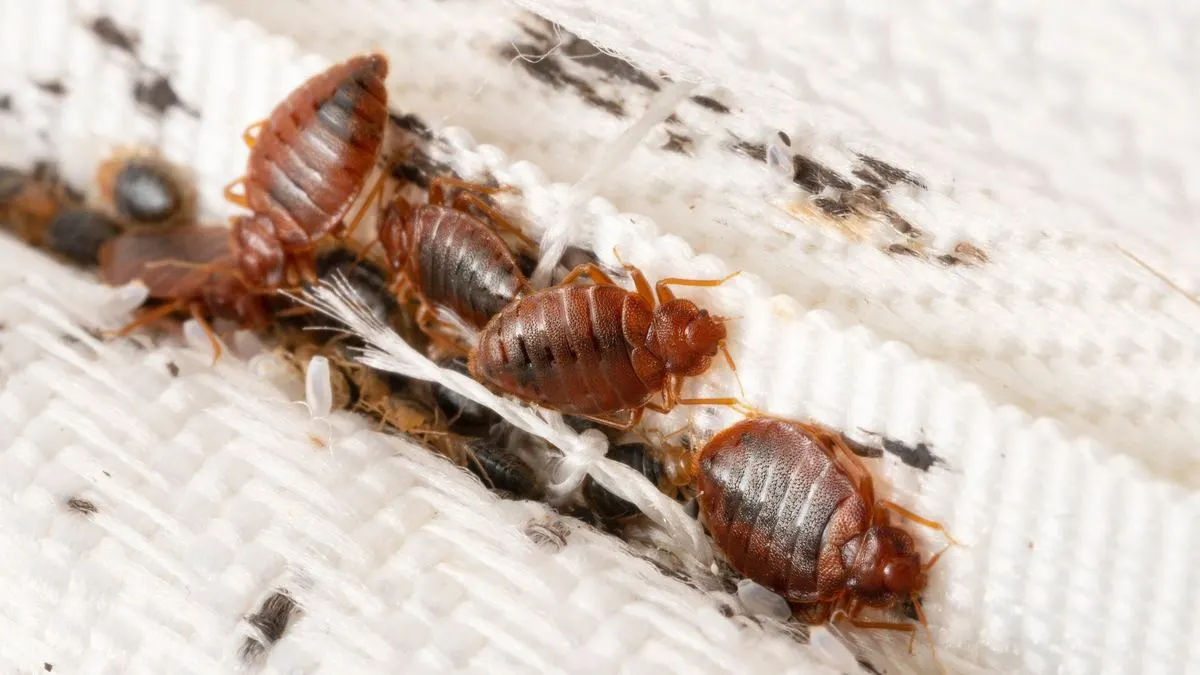
| Bed bug | Bed bugs are broader, flat from top to bottom, about 5 mm long, crawl rather than jump and hide in mattress seams and bed frames. |
| Springtail | Springtails also jump but are soft, pale or grey, under 2 mm, live in damp spots such as bathrooms and plant pots, and never bite. |
| Dog flea | The dog flea (Ctenocephalides canis) looks almost identical and needs a microscope to separate, but it is less common and treated the same way. |
Signs of cat fleas
- Bites on ankles and lower legs
- Small, itchy red bumps in groups, mostly below the knee, often appearing after sitting on a sofa or rug.
- Pet scratching or over-grooming
- Constant scratching, nibbling at the base of the tail, thinning fur, scabs or bald patches.
- Flea dirt
- Black grit in pet bedding or fur that smears reddish when wetted, because it is digested blood.
- Fleas on white socks
- Walk slowly across carpets in white socks; adult fleas jump on and show up clearly.
- Bites straight after moving in
- Dormant fleas in cocoons hatch in a burst when footsteps and warmth return to a house that stood empty.
Where it lives and how it behaves
Adult cat fleas live on the host, feed on its blood and mate there. Their eggs are smooth and drop straight off into bedding, carpets, sofa cushions and car boots, wherever the pet rests. Larvae avoid light and burrow into carpet pile, feeding on flea dirt and skin debris, then spin a sticky cocoon that picks up dust and sits almost invisible at the base of the fibres. Inside it, a fully formed flea can wait for weeks or months until vibration, warmth or carbon dioxide signals a host nearby. In a warm house the whole cycle takes about a month; in cool conditions it can stretch to several months. Central heating means indoor fleas never really stop for winter.
Health and property risks
For people, the problem is itchy bites that some react to badly. Scratching can break the skin, and the NHS advises seeing a pharmacist if a bite becomes hot, swollen, painful or weeps. Pets suffer more. Flea allergy causes hair loss and sore skin, heavy infestations can make kittens and puppies anaemic, and a pet that swallows a flea while grooming can pick up flea tapeworm. Fleas also travel on foxes, stray cats and other animals, so a home with no pets is not automatically safe.
What UK law says
There is no duty to report fleas in a private home. In rented property, responsibility usually depends on the tenancy agreement and on who brought the fleas in, though a pest problem that makes a home unfit to live in can fall on the landlord. Pet flea products are veterinary medicines licensed for the animal, not for spraying on carpets, and household insecticides are regulated biocides that must be used exactly as the label says.
Can you deal with it yourself?
DIY is often enough for a light, recent infestation. Treat every cat and dog in the home on the same day with a product your vet recommends, and keep it up all year. Never use a dog product on a cat: some contain permethrin, which is poisonous to cats. Then vacuum daily for three weeks, empty the vacuum into an outside bin, and hot-wash pet bedding. Call us if bites carry on after that, if you are being bitten in a house you have just moved into, or if there are no pets and you can't find the source.
How Pest Perfection treats it
We start with a free inspection, confirm it is fleas rather than bed bugs or bird mites, and ask about your pets, when they were last treated and where they sleep. You vacuum thoroughly beforehand and clear the floors. The technician then applies a residual insecticide to carpets, rugs, soft furnishings and the places pets rest, room by room, and everyone stays out until surfaces are dry. Cocoons shield developing fleas, so a few bites in the following fortnight are normal. You get a written record of the products and areas treated, and we come back if activity continues. Treatments start from £90.
Free inspection · from £90 · guaranteed for at least three months
Call 01727 400025How to prevent it
- 1Keep every pet on a vet-advised flea treatment all year, not just in summer
- 2Vacuum where pets sleep at least twice a week, including under sofas and along skirting boards
- 3Hot-wash pet bedding, throws and cushion covers regularly
- 4Ask about previous pets before moving into a rental, and vacuum every room before you unpack
- 5Deal with rodent or bird nests in the loft or walls, which can bring fleas indoors
What we see on our jobs
St Albans City and District Council no longer runs a pest control service, so flea call-outs in the district go to private contractors. Moving house is a classic trigger across Hertfordshire: in a home that stood empty during a sale, fleas left by a previous owner's pet can wait in their cocoons and hatch together when the new occupants arrive. Late summer and early autumn, when homes are warm and humid, are the busiest months.
Areas we cover: St Albans · Harpenden · Hatfield · Welwyn Garden City · Watford · all areas
Cat flea: questions
Can cat fleas live on humans?
No. They bite people but don't live or breed on us; we are a stopgap when no pet is around. That is why bites often spike while a pet is away or in a house that has been empty.
Why am I being bitten when I don't have pets?
Usually because a previous occupant's pet left eggs and cocoons in the carpets, or wildlife is nesting in the loft or walls. Cocoons can wait for months, then hatch as soon as someone moves back in.
How long does flea treatment take to work?
Adult fleas die soon after contact with treated surfaces, but fleas still in their cocoons are protected, so new ones can keep hatching for around two weeks. Follow the aftercare sheet, and don't wash or shampoo treated carpets for at least two weeks.
Do I need to leave the house during flea treatment?
Yes, for a few hours. People and pets stay out until treated surfaces are dry, fish tanks are covered with pumps switched off, and caged birds go elsewhere. Your technician will confirm the timing for the product used.
Are flea bombs worth buying?
They can knock down adult fleas in open rooms, but the fog doesn't reach under furniture or deep into carpet pile where larvae live, so results are often disappointing. Treating pets and vacuuming daily usually achieves more.