How to identify a house mouse
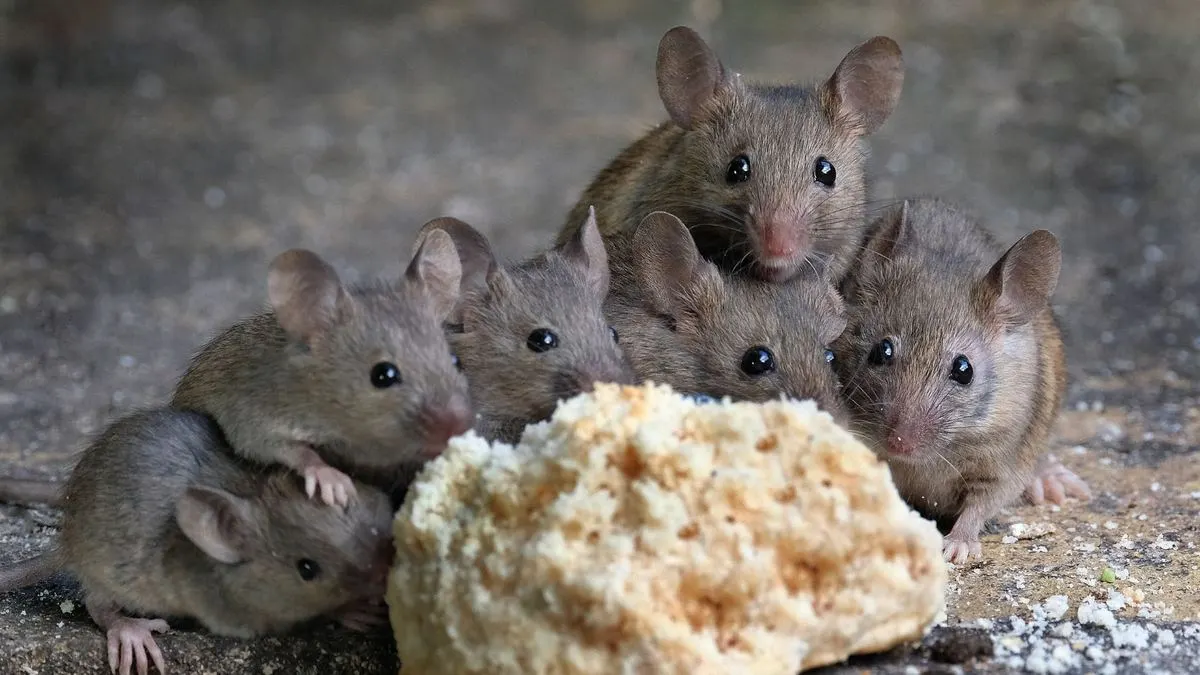
- Head and body 7–9.5 cm, tail 6–10 cm, and adults weigh roughly 12–30 g.
- Even grey-brown fur on the back with a belly only slightly lighter, not the clean white underside of a wood mouse.
- Large ears for its size, small dark eyes and a pointed snout.
- Scaly, almost hairless tail with visible rings.
- A strong musty, stale smell in cupboards or under floors where a colony has settled.
- Climbs pipes, cables and rough brickwork easily, so lofts and upper-floor flats are not out of reach.
What it's often confused with
| Look-alike | How to tell them apart |
|---|---|
| Wood mouse | Sandy brown with a clearly white belly, bigger eyes and ears, long hind feet and a bounding run; it comes in from fields and gardens, mostly in autumn. |
| Yellow-necked mouse | Larger than a wood mouse with a yellow band across the chest; it lives in older woodland in south-east England and sometimes nests in lofts. |
| Common shrew | A long, twitching pointed snout, tiny eyes and ears and dark velvety fur; it eats insects, not your food, and trapping one needs a licence. |
| Field and bank voles | A blunt face, small ears half-hidden in fur and a short tail around a third to half the body length; voles rarely come indoors. |
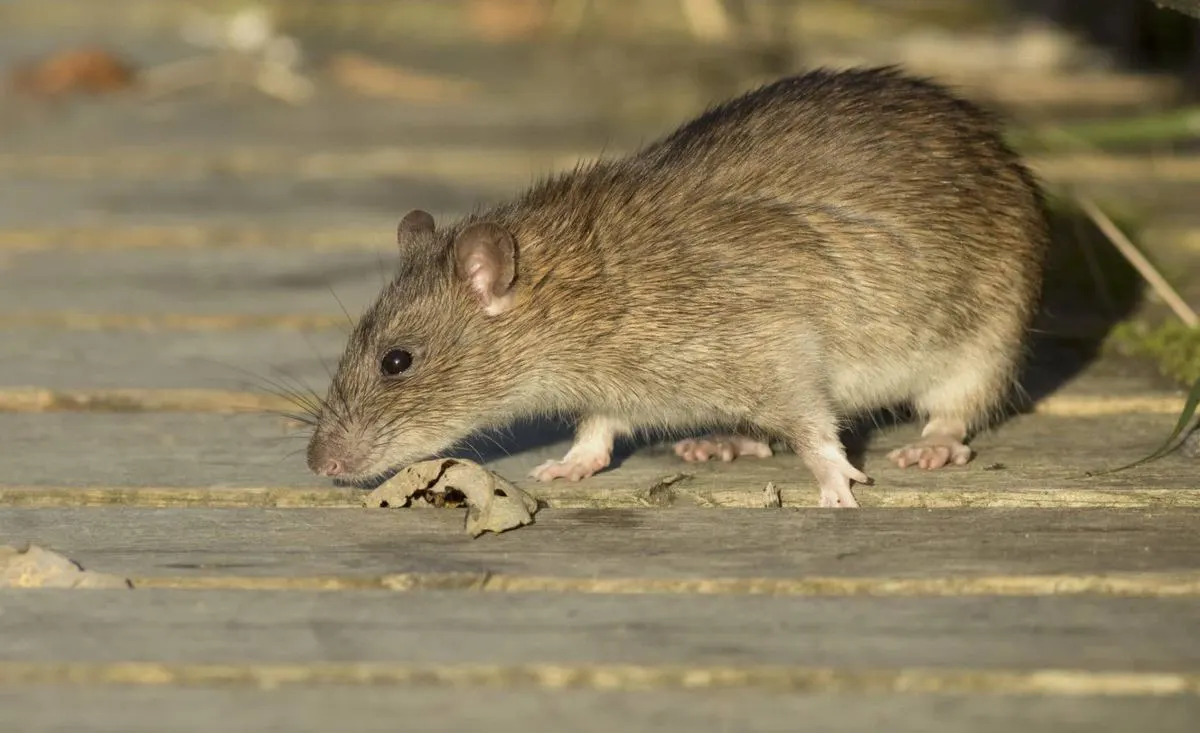
| Young brown rat | A head and feet that look too big for the body, a thicker tail, and droppings over 10 mm long. |
Signs of house mice
- Droppings
- 3–8 mm, dark and rod-shaped with pointed ends; one mouse leaves dozens a night, scattered rather than clustered.
- Urine pillars
- Small columns of grease, dirt and dried urine that build up at the same spots where mice have been active for a long time.
- Gnawing
- Small tooth marks, nibbled packets with shredded packaging left behind, and chewed cables in lofts.
- Nests
- Loose balls of shredded paper, fabric or loft insulation in warm hidden places: behind the boiler, under the bath, in wall cavities.
- Smear marks
- Faint dark grease lines along skirting boards and around the holes where pipes pass through walls.
- Sounds
- Light scratching and scampering in ceilings, walls and under kitchen units, usually after dark.
Where it lives and how it behaves
House mice live almost entirely indoors or in outbuildings once they have found a way in. They nest close to food, often only a few metres away, and travel along walls and behind units rather than across open floors. They nibble at many food sources instead of eating one meal in one place, which is why a single bait point often fails. Numbers build fast: a female can breed from about six weeks old, pregnancy lasts roughly three weeks, and litters are usually five to eight. Mice get most of the water they need from their food, so a dry kitchen or loft suits them well.
Health and property risks
Mice urinate constantly as they move, so worktops, food packaging and cutlery drawers can be contaminated with salmonella and other bacteria. Proteins in mouse urine are a known allergen and can make asthma worse, particularly in children. Chewed cables in lofts and behind appliances can start fires, and nests flatten loft insulation. In a food business, droppings in a store room can lead to a poor hygiene rating or closure by environmental health.
What UK law says
House mice fall under the Prevention of Damage by Pests Act 1949 alongside rats: occupiers must tell the council about substantial numbers, and councils can require owners to act. Rodenticides must be used under the UK stewardship regime and exactly as the label says, and in England glue traps cannot be used on rodents without a licence. Shrews are protected from trapping without a licence, so traps must be set where they catch mice. Food businesses must keep premises pest-free under food hygiene law.
Can you deal with it yourself?
One or two mice in a garage or shed can be dealt with using snap traps baited with a pea-sized dab of peanut butter or chocolate, set at right angles to the wall where the droppings are. Several traps at once work better than one, and check them daily. Get help when droppings keep appearing after a week of trapping, when mice are in walls or ceilings you cannot reach, or when there are children or pets and you are thinking about poison. Loose poison in a kitchen is a bad idea: mice carry it around and die inside the walls.
How Pest Perfection treats it
At the free inspection we map droppings and gnaw marks to find where mice are nesting and how they are getting in, usually around pipe entries, under kitchen units and where cables pass through walls. Treatment is normally a mix of traps and secured bait stations on their routes, kept away from children, pets and food. We return to check and clear what has been caught, and fill entry holes with wire wool, mesh or cement rather than expanding foam, which mice chew straight through. Every visit is written up so you have a record of what was done.
Free inspection · from £90 · guaranteed for at least three months
Call 01727 400025How to prevent it
- 1Fill gaps around pipes and cables with wire wool and sealant, or cover them with metal plates; anything over about 6 mm is a doorway.
- 2Fit brush strips to the bottom of garage, utility and back doors.
- 3Keep food, including pet food and bird seed, in sealed glass, metal or hard plastic containers.
- 4Clean behind and under the cooker, fridge and dishwasher, where crumbs build up out of sight.
- 5Pull off a kitchen kickboard with a torch in hand if you suspect mice; droppings behind it are an early warning.
- 6Keep lofts and garages tidy so nests and droppings are easy to spot.
What we see on our jobs
The autumn move indoors is noticeable across Hertfordshire: once the fields around Harpenden, Redbourn and Wheathampstead are harvested and nights turn cold, house mice and wood mice both look for warm buildings. In Victorian and Edwardian terraces in St Albans and Hitchin, mice travel between neighbouring houses through gaps in party walls, roof spaces and under floors, so proofing one house on its own may not be enough.
Areas we cover: St Albans · Harpenden · Hatfield · Welwyn Garden City · Watford · all areas
House mouse: questions
Will mice go away on their own?
No. Once they have food, water and a warm nest, mice stay and breed. Cleaning up helps, but a mouse that has found a way in will keep finding crumbs. The mice need removing and the entry points blocking.
Why do mice come into the house in winter?
Mice move indoors from around October as the weather cools and food in fields and gardens runs short. A house offers warmth and a steady food supply, so activity indoors usually rises from October to March.
How can I tell mouse droppings from rat droppings?
By size. Mouse droppings are 3–8 mm with pointed ends and scattered about; rat droppings are 10–14 mm, blunter and usually grouped together. If you find both sizes, you may have both.
Do ultrasonic repellers work against mice?
Not reliably. Mice get used to the sound, and it does not pass through walls, cupboards or furniture. Blocking entry points and trapping works far better.
Can mice get into a first-floor flat?
Yes. Mice climb brickwork, pipes and cables, and travel through wall cavities and service ducts, so flats on any floor can be affected. In a block with shared voids, treating one flat alone often fails.