How to identify a bed bug
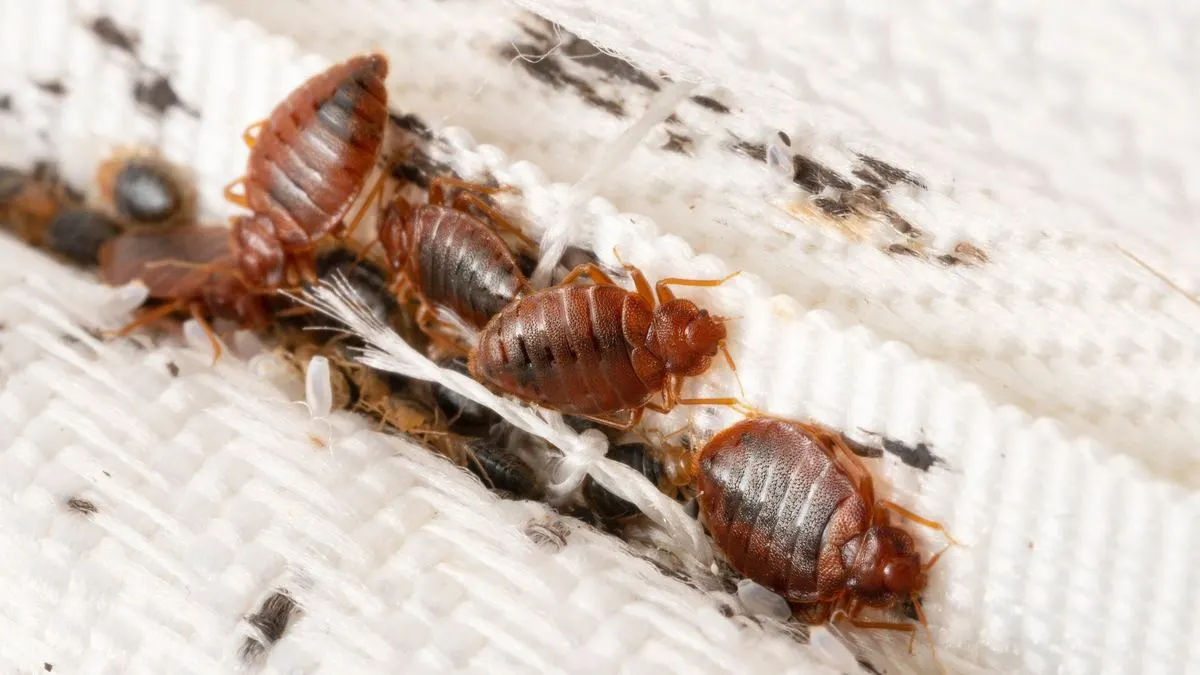
- Adults 4–5 mm, oval and flat as a card when unfed; swollen, longer and darker red after feeding.
- Reddish-brown with no wings; they cannot fly or jump, only crawl.
- Short, broad head with four-segmented antennae and a piercing beak folded underneath.
- Nymphs are 1–4 mm and pale straw-coloured, turning bright red after a meal.
- Eggs are white, about 1 mm, and glued in clusters into seams and cracks.
- A sweet, musty smell in rooms with a heavy infestation.
What it's often confused with
| Look-alike | How to tell them apart |
|---|---|
| Carpet beetle larva | Hairy and banded brown, up to 5 mm, found at carpet edges and in wardrobes; it eats wool and fur rather than blood, though its hairs can irritate skin. |
| Bat bug | Almost identical to the naked eye but with longer hairs on the plate behind the head; it lives near bat roosts, and bats are protected, so correct identification matters before any treatment. |
| Cat flea | Narrow and flattened side to side, and it jumps; bites cluster on ankles and lower legs, and there is usually a pet in the house. |
| Booklouse | Pale, soft and only 1–2 mm, found around damp books, food packets and window frames; it does not bite. |
Signs of bed bugs
- Faecal spots
- Clusters of small black dots on mattress seams, slats and headboards that smear like ink when wiped with a damp cloth.
- Blood spots
- Rust-red marks on sheets and pillowcases where a bug was crushed after feeding.
- Cast skins
- Pale, empty shells in seams and corners, shed as nymphs moult five times on the way to adulthood.
- Eggs
- White, grain-like, about 1 mm, glued into crevices close to where the bugs hide.
- Live bugs
- In mattress piping, bed frame joints, behind headboards, under loose wallpaper and inside sockets near the bed.
- Bites
- Itchy red bumps, often in a line or cluster on the arms, neck and shoulders; some people show no reaction at all.
Where it lives and how it behaves
Bed bugs feed on human blood, usually in the early hours while you sleep, taking five to ten minutes per meal before retreating to a hiding place within a couple of metres of the bed. Each nymph needs a blood meal before it can moult, and at warm room temperatures the step from egg to adult takes about six weeks. A female lays a few eggs a day. Adults can survive months without feeding, so a spare room left empty stays infested. They travel in luggage, second-hand beds and sofas, and move between flats through cavities and along wiring. They have nothing to do with how clean a home is.
Health and property risks
Bed bugs are not known to pass disease to people. The harm is the bites, which can itch for days, and the lost sleep and anxiety that come with knowing something is feeding on you at night. Scratching can break the skin and lead to infection; see a GP or pharmacist if bites become hot, swollen or painful. Heavy infestations stain bedding and mattresses, and carrying an unwrapped mattress down a stairwell can spread bugs to the neighbours.
What UK law says
No law protects bed bugs, and there is no duty to report them. In rented homes, who deals with them depends on the tenancy and on how the bugs arrived, but councils can assess pests as a hazard under the Housing Health and Safety Rating System. In houses in multiple occupation, including student lets, bugs move between rooms, so the landlord is usually the one able to arrange treatment of the whole building.
Can you deal with it yourself?
Bed bugs are hard to clear on your own, and the NHS says as much. What you can do makes a treatment work better: wash bedding and clothes at 60°C, tumble dry on hot for at least 30 minutes, vacuum seams and empty the vacuum outside in a sealed bag, and fit zipped mattress encasements. Shop sprays and foggers tend to scatter bugs deeper into walls and furniture, and many UK bed bugs now resist common insecticides. Don't move to another room to sleep: the bugs follow you and the problem spreads.
How Pest Perfection treats it
We inspect the bed, surrounding furniture and nearby rooms to confirm bed bugs, rule out lookalikes such as bat bugs and carpet beetle larvae, and judge how far they have spread. Before treatment you get a preparation list covering what to wash, bag and move. We then treat seams, frames, skirting, sockets and other hiding places with insecticides approved for bed bugs, chosen with resistance in mind. Eggs can survive the first treatment, so a second visit about two weeks later targets newly hatched nymphs, and further visits are booked if live bugs are still found. Each visit is recorded in writing. Treatment starts from £90.
Free inspection · from £90 · guaranteed for at least three months
Call 01727 400025How to prevent it
- 1Check hotel beds on arrival: lift the sheet at a corner and look along the mattress seams and headboard with a phone torch.
- 2Keep luggage on a rack or in the bath when travelling, not on the bed or floor.
- 3Wash and hot-dry clothes as soon as you get home from a trip.
- 4Inspect second-hand beds, sofas and bedside tables before they come into the house.
- 5Use pale bedding and a mattress encasement so spots and bugs show up early.
- 6Cut clutter around beds, where bugs hide and treatment is harder.
What we see on our jobs
Bed bugs move with people, and Hertfordshire moves a lot of them: commuters on the Thameslink and West Coast lines into London, and travellers through Luton Airport on the county's edge. Shared houses in Hatfield around the University of Hertfordshire see beds, sofas and tenants change every academic year, which suits bed bugs. Hotels and short-stay lets near the M1, A1(M) and M25 are exposed for the same reason.
Areas we cover: St Albans · Harpenden · Hatfield · Welwyn Garden City · Watford · all areas
Bed bug: questions
Can you see bed bugs with the naked eye?
Yes. Adults are 4–5 mm, about the size of an apple seed. Eggs and newly hatched nymphs are harder to spot at around 1 mm and pale, but a torch and a close look along mattress seams will usually find them.
Do bed bugs mean my house is dirty?
No. Bed bugs feed on blood, not dirt or food waste, and turn up in spotless homes and expensive hotels alike. Clutter makes them harder to find and treat, but cleanliness does not stop them arriving.
Should I throw my mattress away?
Usually not. Most mattresses can be treated and then sealed in an encasement. If you do throw one out, wrap it completely in plastic first and label it, so bugs do not drop off on the stairs or move in with whoever picks it up.
How long does bed bug treatment take?
Plan for at least two visits about two weeks apart, because eggs survive the first treatment. Heavy or long-running infestations, or ones that have spread between rooms, can need more.
Can bed bugs live in a sofa?
Yes, especially if someone sleeps or sits on it for long periods. Check the seams, the underside and the joints of the frame. Sofas used as beds in shared houses are a common hiding place.