How to identify a grey squirrel
- Body 24–28.5 cm with a bushy tail almost as long, weighing roughly 400–720 g
- Grey coat, often with brownish tinges along the back and flanks, and a white or pale belly
- Rounded ears without the long winter tufts of a red squirrel
- Active by day, especially early morning and late afternoon; climbs brickwork and leaps from trees onto roofs
- Builds a leafy, twiggy nest (drey) about 30 cm across in trees, or a heap of shredded insulation in a loft
What it's often confused with
| Look-alike | How to tell them apart |
|---|---|
| Red squirrel | Reds are smaller, rusty-red with tufted ears and legally protected, but there is no wild population in Hertfordshire, so a squirrel in a Herts loft is almost certainly grey. |
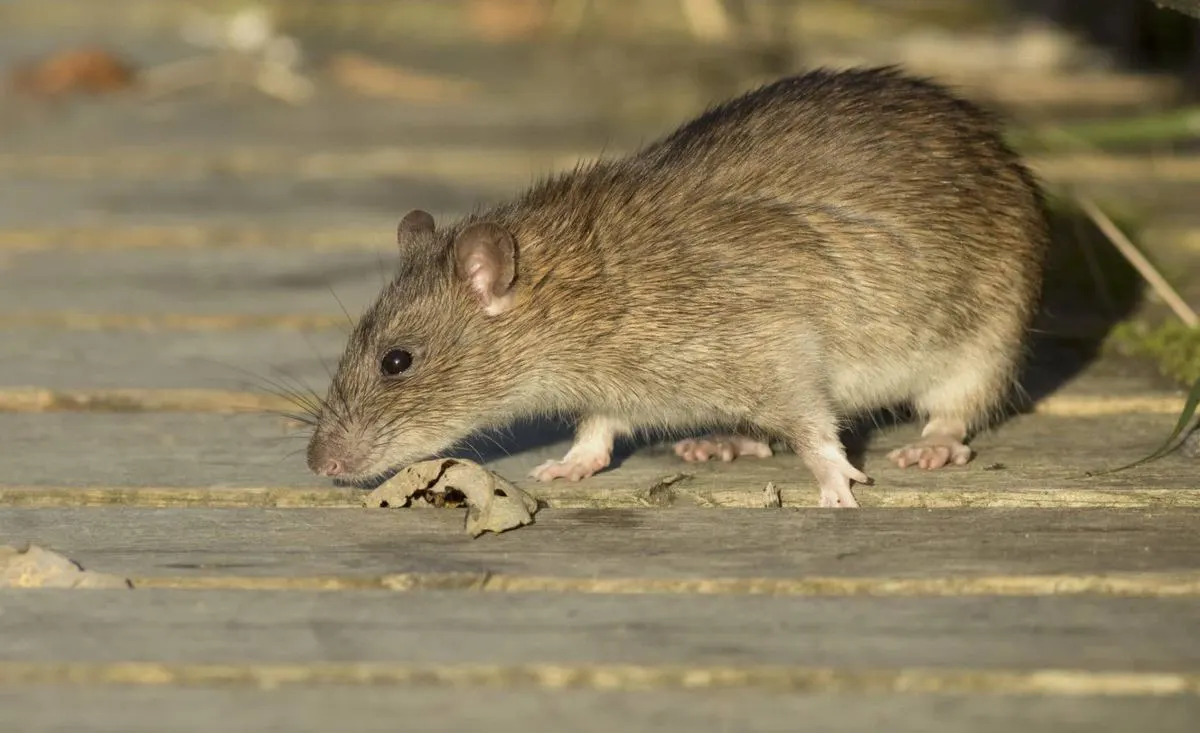
| Brown rat | Rats have a thin, scaly, nearly bare tail and are mostly heard at night, while squirrels have a fluffy tail and are noisiest in daylight. |
| Edible dormouse (glis glis) | Glis glis are much smaller, with big dark-ringed eyes, are active at night from late spring to autumn, and can only be controlled under licence. |
Signs of grey squirrels
- Noise at dawn and dusk
- Heavy scampering, scratching and rolling sounds overhead, mostly in daylight hours.
- Entry holes at the eaves
- Chewed fascia boards, soffits or roof vents, often with smooth, worn edges and grey hairs caught on them.
- Chewed timber and cables
- Gnaw marks on joists, rafters, stored boxes and wiring, and torn roof membrane.
- Nest in the insulation
- Insulation dragged into a heap and mixed with leaves, twigs and shredded paper.
- Droppings and staining
- Small rounded droppings in the loft, and urine-stained insulation or ceiling marks below the nest.
Where it lives and how it behaves
Grey squirrels were brought to Britain from North America between 1876 and 1929 and now live wherever there are trees, including suburban gardens. They are active by day, feed on seeds, nuts, buds and bird food, and bury food in autumn to dig up later. Females breed in two seasons between midwinter and summer, and a warm, dry loft makes an attractive nursery. They reach roofs from overhanging branches or by climbing rough brickwork, then chew into gaps at the eaves, soffits, vents and roof valleys. Once inside they shred insulation for a nest and gnaw whatever they meet.
Health and property risks
The most serious risk is fire. Squirrels gnaw electrical cables, and bare wiring in a loft full of dry nesting material is dangerous. They also chew rafters, joists, roof membrane, stored belongings and plastic water pipes. Urine and droppings soak into insulation and can stain ceilings, and a squirrel that dies in a wall void leaves a strong smell for weeks. The noise alone, often starting around sunrise, is enough to wreck a household's sleep.
What UK law says
Grey squirrels are listed in Schedule 9 of the Wildlife and Countryside Act 1981, and under section 14 it is an offence to release one, or let it escape, into the wild. They are also a species of special concern under the invasive alien species rules, which ban keeping, moving or releasing them; GOV.UK says a trained, equipped person who catches one should humanely kill it if possible. A trapped squirrel is protected from unnecessary suffering under the Animal Welfare Act 2006.
Can you deal with it yourself?
You can do some of the groundwork yourself: cut back branches that overhang the roof, and repair loose or rotten soffits and fascia boards. The part that goes wrong is the squirrel. Blocking a hole while a squirrel or its young are inside traps them in the loft, where they chew a new way out or die in a void. Live-catching one and driving it to a park is illegal. Unless you are trained to dispatch an animal humanely, leave trapping to someone who is, and proof the roof once the loft is clear.
How Pest Perfection treats it
We begin with a free inspection of the roof line and loft to find every entry point, confirm the animal is a grey squirrel rather than glis glis or rats, and check for young. Removal is by trapping in the loft, with traps checked frequently and any squirrel caught humanely dispatched, because release is not a legal option. Once activity has stopped, we proof the entry points with galvanised mesh or metal flashing and advise on any tree work. You get a written record of visits, traps and proofing, and we return to check nothing has chewed back in. Treatment starts from £90.
Free inspection · from £90 · guaranteed for at least three months
Call 01727 400025How to prevent it
- 1Keep tree branches well clear of the roof so squirrels can't jump across
- 2Repair rotten fascia and soffit boards and fit metal mesh over gaps at the eaves and roof vents
- 3Check the loft in autumn and late winter for shredded insulation and chewed timber
- 4Use squirrel-resistant bird feeders and clear up spilled seed
- 5Never block an entry hole until you know the loft is empty
What we see on our jobs
Much of Hertfordshire is wooded commuter belt. Mature gardens, parkland such as Verulamium Park in St Albans and Cassiobury Park in Watford, and streets of old trees all suit grey squirrels. Houses with branches overhanging the roof and older timber soffits are the most exposed. In the west of the county, it is worth confirming that the animal in the loft is not glis glis, which needs a different, licensed approach.
Areas we cover: St Albans · Harpenden · Hatfield · Welwyn Garden City · Watford · all areas
Grey squirrel: questions
Can I catch a squirrel and release it somewhere else?
No. Releasing a grey squirrel into the wild is an offence under section 14 of the Wildlife and Countryside Act 1981, however far away you take it. A caught grey squirrel should be humanely killed by someone trained to do it.
How do I know it's squirrels and not rats in the loft?
Timing is the best clue. Squirrels are loudest in daylight, especially early morning, while rats are mostly heard at night. Squirrel entry points are usually at the eaves and roof line; rats more often come up through cavity walls or around pipes.
When is the best time to deal with squirrels in the loft?
As soon as you notice them. From late winter into summer a female may have young in the loft, which makes removal slower, and every week of gnawing adds to the repair bill.
Will squirrels leave the loft on their own?
Sometimes for a while, but a loft that has been used as a nest will be found again, often by the same animals. Without proofing, the problem usually comes back.
Do squirrels really chew electric cables?
Yes. Like all rodents, their front teeth grow constantly and they gnaw to keep them worn down, and loft cables are a common casualty. If you find bare copper, have an electrician check it.