How to identify an edible dormouse
- Body 12–17.5 cm with a bushy, squirrel-like tail of 10–15 cm
- Soft grey-brown fur, a pale belly and large black eyes with dark rings around them
- Nocturnal and very agile; climbs walls, trees, pipes and cables with ease
- Weighs about 140 g in summer and fattens up to nearly double that before hibernating
- Noisy: thumps, scrabbling, squeaks and chattering calls in the loft after dark
What it's often confused with
| Look-alike | How to tell them apart |
|---|---|
| Grey squirrel | Grey squirrels are about twice the size and active by day, whereas glis glis are smaller, big-eyed and heard at night. |
| Hazel dormouse | Hazel dormice are tiny (6–9 cm body), golden-orange with a thick furry tail, and strictly protected, so never disturb or trap anything that could be one. |
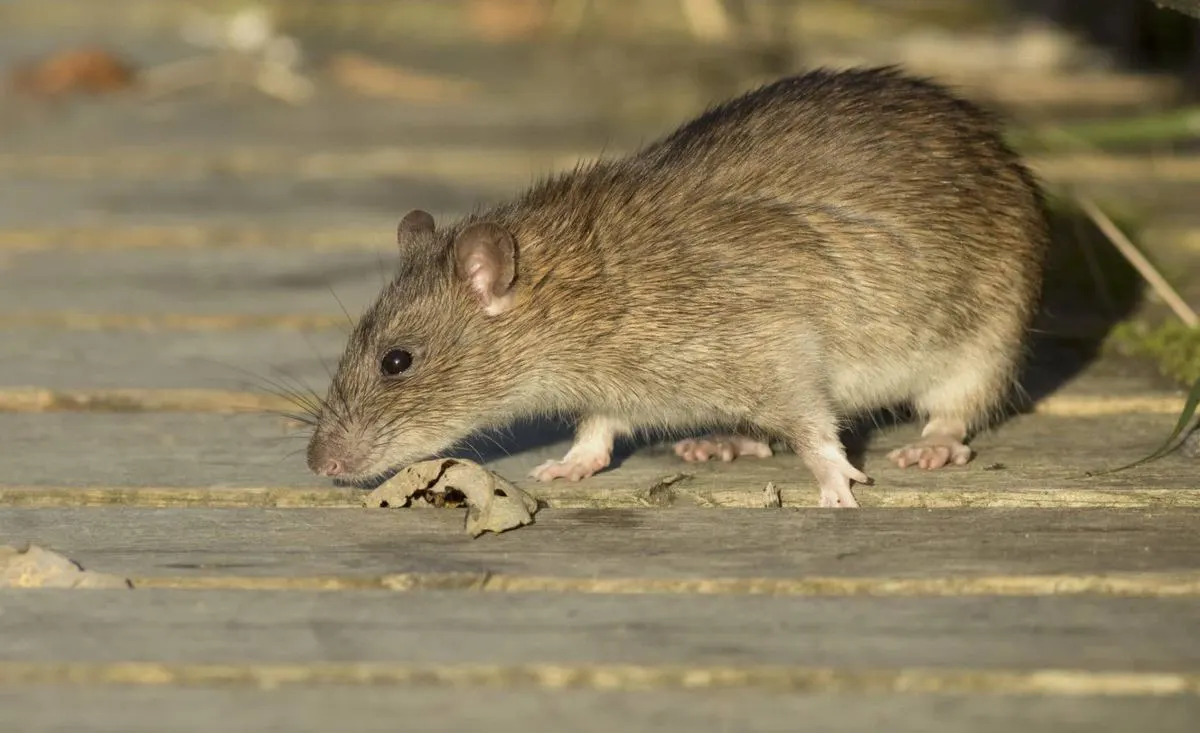
| Brown rat | Rats have a long, scaly, almost bare tail and a pointed face, while the glis glis tail is fully furred. |
Signs of edible dormice
- Night-time noise in summer
- Thumping, running, squeaking and chattering overhead after dark, typically from June into autumn.
- A seasonal pattern
- Activity stops in autumn and returns the following late spring, often year after year.
- Chewed cables and timber
- Gnawing on joists, wiring, plastic pipes and stored boxes in the loft.
- Droppings
- Dark droppings, larger than a mouse's, often gathered on joists and loft boards.
- Raided fruit and food
- Stored apples, bird food and pet food eaten or carried off, sometimes from inside the house.
Where it lives and how it behaves
Walter Rothschild released an unknown number at Tring in 1902, and the Mammal Society says the population is still confined to the Chilterns and nearby woods, mostly within 35 km of Tring. Glis glis spend much of the year asleep, hibernating from around October to May, often in old burrows. After emerging they feed on buds, fruit, nuts and bark in beech woodland and gardens. Many move into buildings, frequently occupied houses, getting in at the eaves and nesting in lofts, roof spaces and wall voids. Young are normally born in August, and breeding depends on the beech crop, so numbers vary a lot between years.
Health and property risks
The biggest risk is fire from gnawed electrical cables. Glis glis also chew timber, plastic pipes and anything stored in the loft, and can fall into open water tanks and contaminate them. Their night-time noise is often extreme, enough to keep a household awake through the summer. Outdoors they strip bark from trees and raid orchards. Unlike most loft pests, they return to the same buildings year after year unless the entry points are sealed.
What UK law says
Glis glis are listed in Schedule 6 of the Wildlife and Countryside Act 1981, which bans trapping, snaring, poisoning and gassing them unless licensed, and in Schedule 9, which makes releasing one an offence. In England, trapping is done under Natural England's class licence CL02: users must register first, use approved live-capture or spring traps set in tunnels, check them at least every 24 hours, and humanely kill any animal caught. Release is not allowed.
Can you deal with it yourself?
There is very little safe DIY with glis glis. Setting traps yourself without registering under the CL02 licence risks an offence, poison is unlawful for them, and blocking holes in summer can shut animals inside. What you can do: note when the noise starts and stops, keep loft food and fruit stores sealed, fit a lid on the water tank, and keep branches back from the roof. The lasting fix is proofing, done in winter while the animals are hibernating, usually away from the house.
How Pest Perfection treats it
A free inspection comes first, ideally in the active season, to confirm glis glis from droppings, damage and timing, and to rule out the protected hazel dormouse, rats or squirrels. Where trapping is needed, it is done only under Natural England's CL02 class licence by a registered user, with approved traps set in tunnels, checked at least every 24 hours, and any animal caught humanely dispatched as the licence requires. Once the season ends, we survey and proof entry points at the eaves, roof and pipework so they can't return in spring. You get a written record of visits and proofing, and we follow up the next season where needed. Prices start from £90.
Free inspection · from £90 · guaranteed for at least three months
Call 01727 400025How to prevent it
- 1Proof eaves, soffits, vents and gaps around pipes during winter, while glis glis are hibernating
- 2Cut back trees and climbing plants that touch the roof or walls
- 3Fit a secure lid on any loft water tank
- 4Store fruit, bird food and pet food in sealed containers
- 5Keep a note of when noise starts and stops each year to help confirm the species
What we see on our jobs
West Hertfordshire sits inside the glis glis range. The Mammal Society places them mostly within 35 km of Tring, which takes in Berkhamsted, Hemel Hempstead, Watford and much of the St Albans district, and Watford Borough Council's own pest price list has included glis glis treatment. Homes backing onto beech woods and the Chiltern slopes are the most exposed.
Areas we cover: St Albans · Harpenden · Hatfield · Welwyn Garden City · Watford · all areas
Edible dormouse (glis glis): questions
Are glis glis protected in the UK?
Partly. They are not strictly protected like the hazel dormouse, but they are listed in Schedule 6 of the Wildlife and Countryside Act 1981, so trapping, poisoning and similar methods are banned except under licence, and releasing one is an offence.
When are glis glis active?
Roughly from late May until September or October. They hibernate through winter and into spring, so a loft that is silent in March can be noisy again by midsummer.
Can I trap glis glis and release them in the woods?
No. Releasing one is an offence under the Wildlife and Countryside Act 1981, and Natural England's CL02 licence says edible dormice caught alive cannot be released and must be humanely dispatched.
How can I tell glis glis from a hazel dormouse?
By size and colour. Glis glis are grey with a body 12–17.5 cm long; hazel dormice are golden-orange and under 9 cm. If you think you have hazel dormice, stop and get advice, because they are strictly protected.
Why have glis glis come back after we got rid of them?
Because entry points were left open. Glis glis return to buildings they know each spring, so removal without winter proofing rarely lasts.