It's a warm afternoon, you're sitting in the garden with a cold drink, and something buzzing lands on the rim of your glass. Your first instinct? Panic. But before you start swatting, it's worth pausing to ask: is that a wasp or a bee? It might seem like a trivial question, but the answer actually matters quite a lot — both for your safety and for the environment.
Wasps and bees are often lumped together as 'stinging insects that ruin picnics,' but they're fundamentally different creatures with different behaviours, different roles in the ecosystem, and very different temperaments. Knowing which one you're dealing with can help you respond appropriately — whether that means leaving them alone, moving away calmly, or calling in a professional to deal with a nest.
In this guide, we'll walk you through the key differences between wasps and bees so you can identify them confidently the next time one buzzes past your ear.
Appearance: How They Look Up Close
The easiest way to tell wasps and bees apart is by looking at them — though admittedly, most people don't fancy getting that close. Bees are generally rounder, furrier, and more robust-looking. The common honeybee has a golden-brown body covered in fine hairs, giving it a soft, almost velvety appearance. Bumblebees are even more distinctive — large, round, and fluffy with bold bands of black and yellow (or sometimes orange or white).
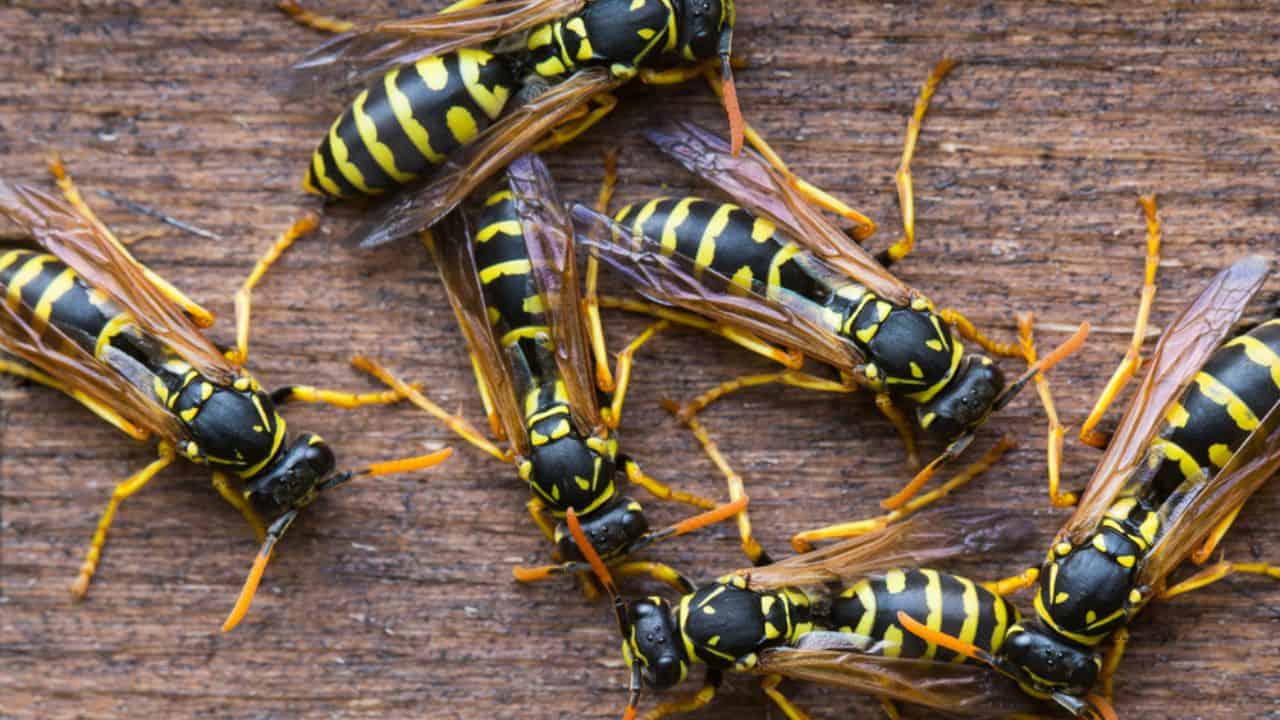
Wasps, on the other hand, are sleeker and more streamlined. The common wasp (Vespula vulgaris) has bright yellow and black stripes with very little hair. Their bodies have a smooth, almost polished look, and they tend to appear more 'angular' than bees. If the insect looks like it's wearing a tiny suit of armour rather than a fur coat, you're probably looking at a wasp.
Hornets — which are essentially large wasps — are even bigger, with a more reddish-brown colouring mixed with yellow. They're less common in the UK but are increasingly spotted in southern England, particularly the European hornet.
Body Shape and Texture
One of the most reliable identification features is the waist. Wasps have a very narrow, pinched waist between the thorax and abdomen — this is where the phrase 'wasp-waisted' comes from. It gives them that distinctive segmented look, almost as if their body is in two separate parts connected by a thin stalk.
Bees have a much thicker, less defined waist. Their bodies flow more smoothly from thorax to abdomen, and their overall shape is plumper and more compact. Combined with their fuzzy coating, bees look altogether more rounded and less intimidating — though both can deliver a painful sting when provoked.
If you can get a close enough look (or snap a photo), checking the waist is usually the quickest way to settle the wasp-or-bee debate once and for all.
Behaviour: Aggression vs Calm
This is where the differences become really noticeable. Bees are generally docile creatures. They're focused on collecting pollen and nectar, and they'll usually only sting if they feel genuinely threatened — such as if you accidentally step on one or disturb their hive. Honeybees can only sting once (the barbed stinger tears away from their body, which kills them), so stinging is very much a last resort.
Wasps, however, are a different story. They can be noticeably more aggressive, particularly towards the end of summer when their colony's food sources start to dwindle. This is when wasps become the uninvited guests at every barbecue, landing on sugary drinks, fruit, and meat. Unlike bees, wasps can sting multiple times without dying, and they're far more likely to do so if they feel threatened or agitated.
That said, it's worth noting that wasps won't usually sting unprovoked. The trouble comes when people panic and start swatting — which wasps interpret as a threat. If a wasp lands on you, the best advice is to stay calm and wait for it to fly away. Easier said than done, we know.
Nesting Habits
Where and how they build their nests is another key difference. Bees tend to nest in sheltered, enclosed spaces. Honeybees build their distinctive wax combs inside cavities — often in hollow trees, wall voids, or purpose-built hives. Bumblebees prefer ground-level spots like abandoned mouse burrows, compost heaps, or thick grass tussocks. Their nests are smaller and less structured than honeybee hives.
Wasp nests are made from chewed wood pulp, which gives them a papery, grey appearance. You've probably seen one before — they look a bit like a grey paper lantern. Common wasps often build their nests in loft spaces, sheds, garages, and wall cavities, though they can also nest underground. A mature wasp nest can house several thousand wasps by late summer, which is when they tend to cause the most problems.
If you spot a nest — whether it belongs to bees or wasps — it's best not to disturb it yourself. Bee nests should generally be left alone or relocated by a beekeeper, while wasp nests may need professional treatment, especially if they're in a high-traffic area of your home or garden.
Diet and Feeding Patterns
Bees are vegetarians. They feed exclusively on nectar and pollen, which they collect from flowers and bring back to their colony. This makes them incredibly important pollinators — without bees, many of the crops and wildflowers we rely on would struggle to reproduce. In the UK alone, bees pollinate roughly 80% of wildflowers and contribute billions of pounds to agriculture each year.
Wasps have a more varied diet. In spring and early summer, they're actually beneficial predators — adult wasps feed on sugary substances like nectar and ripe fruit, but they hunt insects, caterpillars, and other invertebrates to feed their larvae. This makes them useful pest controllers in their own right. However, as the colony starts to decline in late summer, worker wasps lose their purpose and go searching for sugar — which is when they start bothering humans at outdoor events.
Understanding this dietary difference helps explain why wasps become such a nuisance in August and September. They're not being malicious; they're simply hungry and desperate. That doesn't make them any less annoying, of course.
Sting Differences
Both wasps and bees can sting, but the experience is quite different. A bee sting tends to be a one-off event — the barbed stinger embeds in your skin and the bee dies shortly afterwards. The sting itself is painful and often leaves a small, swollen welt that can itch for a day or two. Removing the stinger quickly (by scraping it out rather than pinching it) can reduce the amount of venom injected.
Wasp stings are generally sharper and more immediately painful. Because wasps have smooth stingers, they can sting repeatedly without injuring themselves. This means a single wasp can deliver multiple stings in quick succession, which is particularly concerning if you accidentally disturb a nest. For most people, a wasp sting causes localised pain, redness, and swelling that subsides within a few hours.
For a small percentage of people, stings from either wasps or bees can trigger a severe allergic reaction (anaphylaxis), which requires immediate medical attention. If you or someone nearby experiences difficulty breathing, swelling of the face or throat, dizziness, or a rapid heartbeat after being stung, call 999 immediately.
Why It Matters: What to Do When You Find a Nest
So why does it matter whether you're dealing with wasps or bees? Because the appropriate response is completely different.
If you find a bee nest — particularly a bumblebee nest — the best course of action is usually to leave it alone. Bumblebee colonies are small (typically 50-400 bees) and only last a single season. They're not aggressive, and they're doing vital work for the local ecosystem. If the nest is in an inconvenient location, a local beekeeper may be able to relocate it. Honeybee swarms can also be collected and rehomed by experienced beekeepers.
Wasp nests are a different matter. A mature wasp nest in your loft, shed, or garden can contain thousands of wasps and poses a genuine risk — particularly to children, pets, and anyone with a sting allergy. Unlike bee nests, wasp nests should be treated professionally if they're in a location where they could cause problems. DIY wasp nest removal is strongly discouraged, as disturbing a nest can trigger a mass defensive response from the colony.
When to Call a Professional
If you've found a nest and you're not sure whether it belongs to wasps or bees, it's always best to get a professional opinion before taking any action. At Pest Perfection, we regularly receive calls from homeowners across St Albans, Hertfordshire, and the surrounding areas who've spotted a nest but aren't sure what they're dealing with.
Our technicians can quickly identify the species and advise on the best course of action. If it's a wasp nest that needs treating, we use targeted, professional-grade treatments that are safe, effective, and minimise any risk to you, your family, and your pets. If it turns out to be a bee nest, we'll advise you on the best way to leave it undisturbed or put you in touch with a local beekeeper who can help.
At Pest Perfection, we believe in responsible pest management. We'll always recommend the least invasive solution and will never treat a bee nest unnecessarily. Bees are vital to our ecosystem, and we take their protection seriously.
Whether you're dealing with wasps circling your garden, a nest in your loft, or simply want peace of mind, don't hesitate to get in touch. Our friendly, experienced team is here to help — and we offer free, no-obligation advice on any pest concern. Call us today or use our online booking form to arrange a visit. The sooner we can assess the situation, the sooner you can enjoy your garden again without looking over your shoulder.