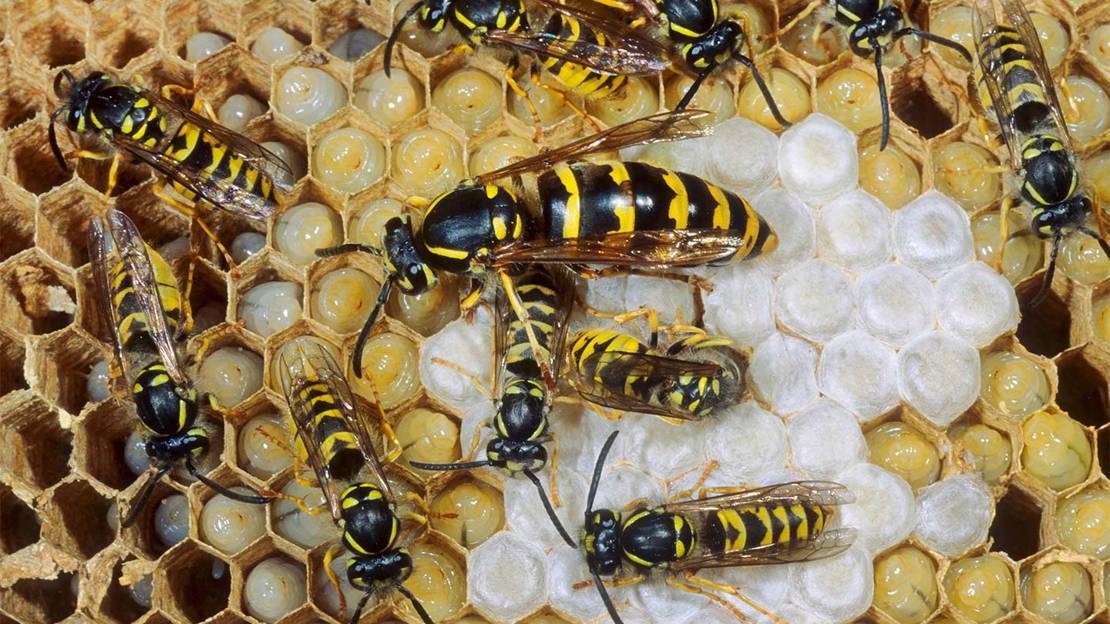
German Paper Wasp Identification & Behaviour
The German paper wasp (Vespula germanica) is one of the most common and aggressive stinging insect pests encountered across the United Kingdom, including the United Kingdom, and the wider South East. Often confused with the common wasp (Vespula vulgaris), the German paper wasp is distinguished by three small black dots on its face (clypeus) rather than the anchor-shaped mark found on the common wasp. Adults measure 12–17 mm in length with vivid yellow and black banding, a narrow waist, and smooth, relatively hairless bodies — features that differentiate them from the rounder, fuzzier honeybee. German paper wasps are social insects that form annual colonies. In spring, a single overwintered queen emerges from hibernation and begins constructing a small, papery nest from chewed wood fibres mixed with saliva. She lays the first eggs and rears the initial brood of workers herself. As the colony grows through summer, the workers take over nest construction, foraging, and brood care, while the queen focuses solely on egg-laying. By late July to September, a mature nest can house 5,000–10,000 individuals and grow to the size of a football or larger. Nests are commonly built in loft spaces, wall cavities, beneath roof tiles, inside sheds and outbuildings, in air bricks, behind fascia boards, and occasionally underground in disused rodent burrows or compost heaps. German paper wasps pose a genuine health risk. Unlike honeybees, wasps can sting repeatedly without dying, and their venom contains proteins that can trigger severe allergic reactions — including anaphylaxis — in sensitised individuals. Even for those without allergies, multiple stings from a disturbed nest can cause significant pain, swelling, and in rare cases, medical emergencies. Wasps become increasingly aggressive as autumn approaches, when the colony's food supply shifts from protein (insects) to sugar (fallen fruit, fizzy drinks, jams), bringing them into frequent conflict with humans at barbecues, pub gardens, school playgrounds, and outdoor dining areas. DIY wasp nest removal is extremely dangerous and strongly discouraged. Disturbing a nest without professional equipment and insecticides can provoke a mass stinging response from thousands of workers, and many serious wasp-sting incidents in the UK each year result from amateur removal attempts. Pest Perfection's NPTA-registered technicians are fully trained and equipped for safe, effective wasp nest treatment and removal across the United Kingdom, and the wider UK, with same-day appointments available throughout the season.
If you suspect a german paper wasp problem, don't hesitate to contact us for a professional inspection. Learn more about our professional pest control services.
Signs of a German Paper Wasp Infestation
- A visible wasp nest — a papery, grey or light brown structure made from chewed wood pulp, often found in loft spaces, wall cavities, beneath roof eaves, inside sheds, behind fascia boards, or underground in disused burrows; nests start golf-ball sized in spring and can grow to the size of a football or larger by late summer
- Large numbers of wasps flying in and out of a specific entry point on your property — a steady stream of wasps entering a gap in the roofline, an air brick, a crack in brickwork, or a hole in the ground is the most reliable indicator of a nearby nest
- Increased wasp activity around outdoor eating areas, bins, and kitchen windows — wasps are attracted to sweet foods, fruit, meat, and sugary drinks, and persistent foraging activity near your home suggests a colony within 200–300 metres
- A persistent buzzing or humming sound coming from within a wall, ceiling, loft space, or cavity — this is the sound of thousands of workers fanning the nest to regulate temperature, and it becomes louder as the colony grows through summer
- Dead wasps accumulating on windowsills, in loft spaces, or around light fittings — wasps are attracted to light and frequently emerge inside properties when nests are located in loft spaces or wall cavities, becoming trapped at windows
- Chewed or damaged wood on fences, garden furniture, sheds, and decking — German paper wasps strip wood fibres to manufacture the pulp they use to build and expand their nests, leaving distinctive scrape marks on unpainted timber
- Wasps becoming noticeably more aggressive and persistent from late August through September — as the colony's natural food supply declines, workers become increasingly desperate for sugar, leading to aggressive behaviour around food, drinks, and bins
- Finding wasp 'scout' activity in spring — individual queens emerging from hibernation in March to May may be seen exploring potential nest sites in your roof space, shed, or garden, indicating a nest is about to be established
How to Prevent German Paper Wasp Infestations
- Seal gaps and holes in exterior walls, rooflines, soffits, fascia boards, and around window and door frames before the nesting season begins in spring — German paper wasps exploit openings as small as 10 mm to access loft spaces and wall cavities for nest-building
- Fit fine mesh insect screens over air bricks, ventilation openings, and extractor fan outlets — these prevent queens from entering cavities to establish new nests while maintaining essential airflow to the property
- Keep wheelie bins, recycling bins, and food waste caddies tightly sealed with close-fitting lids, and rinse food containers before disposing of them — accessible waste, particularly sweet residues, is a major attractant for foraging wasps throughout summer
- Cover food and sugary drinks when eating outdoors and clear plates, glasses, and spillages promptly — barbecues, picnics, and outdoor dining in gardens across the United Kingdom are prime situations for wasp encounters during peak season
- Remove fallen fruit from beneath fruit trees regularly and avoid leaving ripe fruit exposed in bowls near open windows — fermenting fruit is one of the strongest wasp attractants in late summer and autumn
- Inspect your loft space, shed, garage, and outbuildings in early spring (March–April) for signs of queen wasps or small, golf-ball-sized starter nests — removing a nest at this early stage is far simpler, safer, and cheaper than dealing with a mature colony of thousands later in summer
- Avoid wearing strong perfumes, brightly coloured or floral-patterned clothing when spending time outdoors during wasp season — these can attract curious foragers and increase the risk of stinging encounters, particularly near known nest sites
Professional Treatment Methods
Professional German Paper Wasp Control & Removal Service
Pest Perfection's German paper wasp control service is designed for speed, safety, and guaranteed results. When you contact us, we aim to attend on the same day wherever possible, particularly for urgent cases involving allergic individuals or nests in high-risk locations. Our NPTA-registered technicians arrive fully equipped with professional-grade insecticides, protective clothing, and specialist application equipment. We assess the nest's location, size, and accessibility, then apply the most effective treatment — typically an insecticidal dust injected directly into the nest entrance for cavity nests, or a targeted spray for visible, accessible nests. Activity ceases within 24–48 hours, and we offer a full treatment guarantee: if wasp activity persists after treatment, we return free of charge. Where accessible, we remove the treated nest to prevent secondary pest issues, and we can proof entry points to reduce the risk of re-colonisation in future years. Every treatment is fully documented, and we carry full public liability insurance. Whether you're a homeowner in the United Kingdom, a school or nursery, a pub or restaurant, or a business anywhere in the United Kingdom and the wider UK, Pest Perfection delivers fast, safe, and effective wasp nest treatment you can trust.
German Paper Wasp Control FAQs
How do I tell the difference between a German paper wasp, a common wasp, and a bee?
German paper wasps (Vespula germanica) have three small black dots on their yellow face (clypeus), while common wasps (Vespula vulgaris) have an anchor- or spade-shaped black mark. Both species have vivid yellow and black banding, a narrow waist, and smooth bodies. Honeybees, by contrast, are rounder, fuzzier, and have a more muted brown-gold colouring with less distinct banding. Bumblebees are larger, rounder, and covered in dense fur. If you're unsure which species you're dealing with, Pest Perfection offers free identification from photos — just send us a picture via our contact page. We never treat honeybees and will always advise you to contact a local beekeeper if bees are involved.
Are German paper wasp stings dangerous?
For most people, a wasp sting causes localised pain, redness, and swelling that subsides within a few hours to a couple of days. However, for individuals with a wasp venom allergy, stings can trigger a severe allergic reaction called anaphylaxis, which can include difficulty breathing, swelling of the throat and face, a rapid drop in blood pressure, and loss of consciousness — this is a medical emergency requiring immediate treatment with adrenaline (EpiPen) and a 999 call. Even non-allergic individuals can experience serious reactions if stung multiple times, which is a real risk when a nest is disturbed. Pest Perfection strongly advises against approaching or disturbing a wasp nest and recommends professional treatment to eliminate the risk safely.
How big can a German paper wasp nest get?
A German paper wasp nest starts as a small, golf-ball-sized structure built by a single queen in spring. As the colony grows through summer, workers continually expand the nest, which can reach the size of a football or even larger by late August to September. A mature nest may contain 5,000–10,000 individual wasps. Nests in loft spaces can grow particularly large because they are sheltered from the weather. The earlier in the season you arrange treatment, the smaller the nest and the simpler, safer, and more affordable the treatment will be.
Is it safe to remove a wasp nest myself?
No. DIY wasp nest removal is extremely dangerous and is the leading cause of serious wasp-sting incidents in the UK. Disturbing a nest — even with shop-bought insecticidal sprays — can provoke a mass stinging response from thousands of workers. Loft nests, cavity nests, and underground nests are particularly hazardous because the wasps can emerge from unexpected exit points inside the property. Over-the-counter products are significantly less effective than the professional-grade insecticides used by Pest Perfection, and many DIY attempts fail to kill the colony, resulting in angry, displaced wasps and an ongoing problem. Always use a qualified, insured pest controller for wasp nest treatment.
When is the best time to treat a wasp nest?
The best time to treat a wasp nest is as early in the season as possible — ideally in spring or early summer when the colony is still small, the nest is manageable, and the number of workers is low. However, Pest Perfection treats wasp nests successfully at any stage of the season, from early spring starter nests through to large, mature colonies in late summer. Treatments are most effective when applied in the early morning or late evening when the majority of workers have returned to the nest. We offer same-day appointments throughout the season, so there's never a need to wait and let the problem grow.
How much does wasp nest treatment cost?
Pest Perfection offers competitive, fixed-price wasp nest treatment for domestic and commercial properties across the United Kingdom, and the wider UK. The cost covers the full treatment, a guarantee against continued activity, and a follow-up visit if needed. Additional nests on the same property are treated at a reduced rate. We provide a clear price over the phone before attending, with no hidden charges. Call us on 01727 400025 for an instant, no-obligation quote.