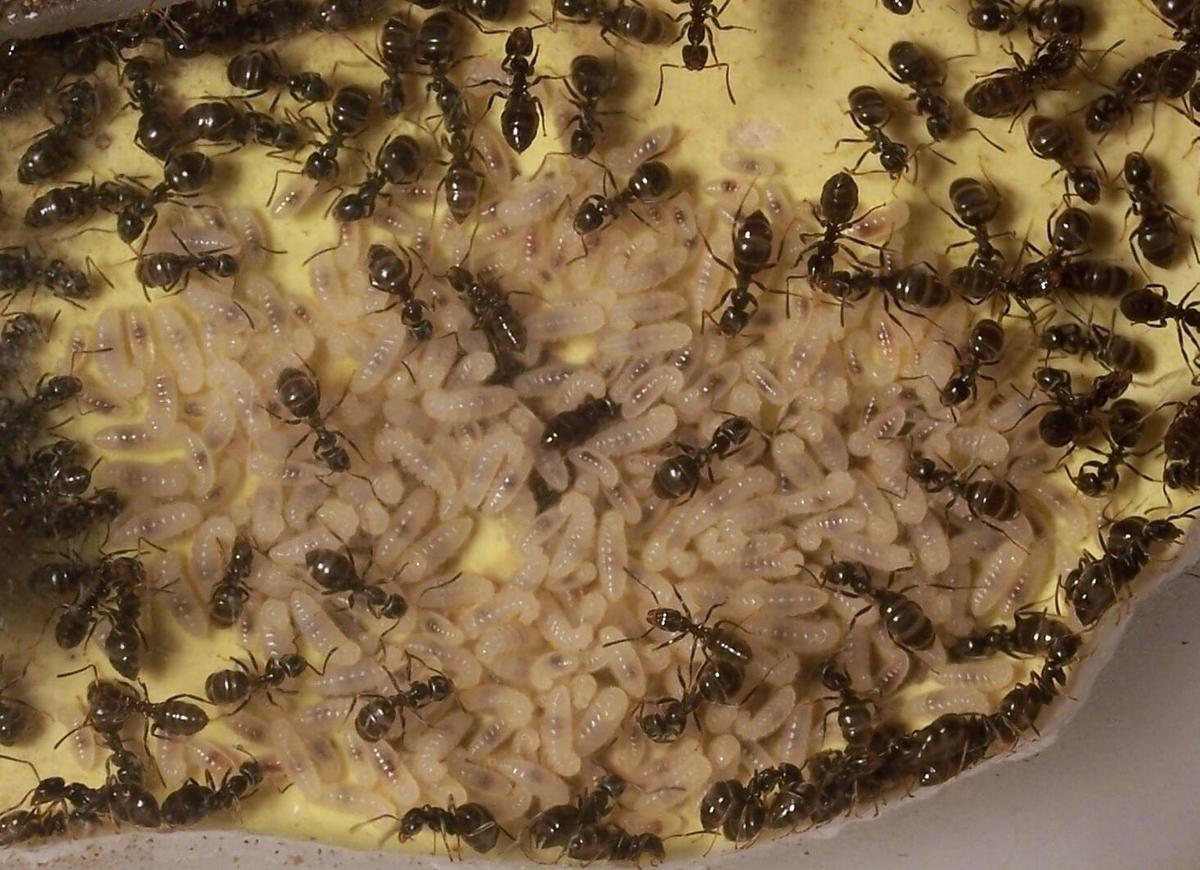
Garden Ant Identification & Behaviour
The black garden ant (Lasius niger) is the most common ant species in the United Kingdom and the one most frequently encountered by homeowners and businesses across the United Kingdom, and beyond. These small, dark brown to black insects measure just 3–5 mm in length, yet they live in highly organised colonies that can contain anywhere from 5,000 to 15,000 workers, all directed by a single queen who may live for over 15 years. Garden ants are not typically dangerous to human health — they do not sting and are not known to transmit diseases directly — but they are a persistent and frustrating nuisance pest that can contaminate food, undermine paving and pathways, and cause considerable distress when they invade properties in large numbers. Garden ants are most active from March through to October, with peak activity during the warm summer months. Worker ants leave the nest in search of food, following scent trails laid down by scouts who have located a sugar, protein, or moisture source. Once a reliable food source is found — a sugary spillage on a kitchen worktop, an open jar of jam, pet food left in a bowl, or even honeydew produced by aphids in the garden — hundreds or thousands of workers will follow the pheromone trail in organised columns, entering buildings through the tiniest of gaps in brickwork, around door frames, through expansion joints, and along cable or pipe entry points. This trail-following behaviour is why simply killing visible ants rarely solves the problem: the pheromone trail persists, and the colony quickly sends replacements. During July and August, colonies produce winged males and queens — the familiar 'flying ants' that emerge in dramatic swarms on warm, humid days. This annual nuptial flight is a natural reproductive event, but it can be alarming when swarms emerge from nests close to or inside buildings. After mating, the males die and the newly fertilised queens shed their wings and seek suitable sites to establish new colonies, perpetuating the cycle. Pest Perfection's NPTA-registered technicians understand garden ant biology and behaviour intimately, enabling us to design targeted treatment programmes that eliminate the colony at source rather than merely suppressing surface activity. Whether ants are trailing through your kitchen, nesting beneath your patio, or swarming from cracks in your walls, we provide fast, effective, and lasting solutions backed by our satisfaction guarantee.
If you suspect a garden ant problem, don't hesitate to contact us for a professional inspection. Learn more about our professional pest control services.
Signs of a Garden Ant Infestation
- Visible trails of ants marching in organised lines along walls, worktops, window sills, and floors — garden ants follow pheromone trails laid by scout workers, and these lines can contain hundreds of individuals moving between the nest and a food source
- Small mounds of fine, excavated soil appearing between paving slabs, along the base of walls, in lawn edges, or around the foundations of your property — these are the entrance spoil heaps from underground nest chambers
- Ants congregating around food sources in kitchens, pantries, and dining areas — garden ants are particularly attracted to sweet substances such as sugar, honey, jam, fruit juice, and syrup, but will also feed on grease and protein
- Flying ants (winged males and queens) emerging in large swarms from nests on warm, humid summer days, typically in July or August — swarms near or inside buildings indicate a mature colony very close to the property
- Ants appearing in unusual indoor locations such as bathrooms, airing cupboards, or around hot-water pipes — this often indicates a nest within the building fabric, particularly in cavity walls or beneath heated floors
- Small piles of debris or frass near cracks in walls, skirting boards, or around door and window frames where ants are entering the property — this material is excavated from nest tunnels within the building structure
- Disturbed or uneven paving, loose pointing between bricks, or subsidence in paths and patios caused by extensive tunnelling beneath the surface — large, established garden ant colonies can undermine light structures over time
- Ants actively farming aphids on garden plants — garden ants protect aphid colonies on roses, broad beans, and other plants in order to harvest the sweet honeydew that aphids produce, and this symbiotic relationship often sustains the ant colony close to the property
How to Prevent Garden Ant Infestations
- Keep all kitchen surfaces, floors, and dining areas scrupulously clean — wipe down worktops after preparing food, sweep up crumbs immediately, and mop floors regularly with a mild detergent that disrupts pheromone trails
- Store all food in airtight containers, including sugar, cereals, biscuits, pet food, and fruit — open packets and fruit bowls are irresistible to foraging garden ants and will sustain a trail within hours of discovery
- Seal all potential entry points around the building envelope, including gaps around door frames, window frames, pipe penetrations, cable entries, air bricks, and expansion joints — garden ants can exploit gaps as narrow as 1 mm
- Address moisture issues such as dripping taps, condensation, and leaking pipes — garden ants are attracted to water sources, especially during dry summer periods, and damp areas around sinks and bathrooms are common foraging sites
- Trim back vegetation, climbing plants, and overhanging branches that touch the building — these act as natural bridges allowing ants to bypass ground-level barriers and access upper floors, windows, and roof spaces
- Manage aphid populations on garden plants near the property — garden ants actively farm and protect aphids for their honeydew, so controlling aphids with horticultural soap or biological controls indirectly reduces the ant population and removes a key food source
- Remove or relocate outdoor food sources close to the building, including bird feeders, compost bins without tight-fitting lids, and fallen fruit beneath trees — these attract foraging workers and encourage colonies to establish nests near the property
Professional Treatment Methods
Professional Garden Ant Control & Removal Service
Pest Perfection's garden ant control service begins with a detailed inspection by one of our NPTA-registered technicians to identify the ant species, locate nest sites, and map entry points into the property. We then implement a tailored treatment programme combining professional-grade baits, residual sprays, and direct nest treatments as appropriate. Every treatment is fully documented with written service reports, and we provide detailed prevention advice to minimise the risk of recurrence. Most domestic ant infestations in the the United Kingdom area are resolved within 1–2 visits, and all treatments come with our satisfaction guarantee. We also offer seasonal ant prevention contracts for properties with recurring problems.
Garden Ant Control FAQs
How do I know if I have garden ants?
The most obvious sign of a garden ant infestation is visible trails of small, dark brown or black ants marching in organised lines along walls, worktops, or floors, particularly in kitchens and areas where food is stored or prepared. You may also notice small mounds of fine soil between paving slabs or along the base of exterior walls, which are the entrance spoil heaps from underground nest chambers. Flying ants appearing indoors during July or August are another strong indicator of a nearby colony. Pest Perfection offers professional ant identification and inspection across the United Kingdom — if you're unsure whether you have garden ants or a different species, send us a photo via our contact page and our technicians will identify them for you.
Are garden ants dangerous?
Garden ants (Lasius niger) are not considered dangerous to human health. They do not sting, they do not bite in any meaningful way, and they are not known to transmit diseases directly. However, they are a significant nuisance pest: they contaminate food and food preparation surfaces as they forage, they can undermine paving and light structures through their tunnelling, and large infestations cause considerable distress to homeowners. In commercial food premises, an ant infestation can lead to hygiene enforcement action and reputational damage. For these reasons, Pest Perfection recommends professional treatment for any persistent or large-scale garden ant problem.
Why do ants keep coming back every year?
Garden ant queens can live for 12–15 years, and once a colony is established near your property, it will produce foraging workers every spring and summer for as long as the queen survives. Killing visible workers with DIY sprays or powders does not affect the queen deep within the nest, so the colony simply replaces the lost workers within days. Additionally, the conditions that attracted ants in the first place — food sources, moisture, warmth, and easy entry points — often remain unchanged. Pest Perfection's approach targets the colony at source using professional baits that workers carry back to the queen, and we combine treatment with proofing and prevention advice to break the cycle permanently.
How does professional ant treatment work?
Pest Perfection's garden ant treatment typically involves three complementary approaches: first, we place professional-grade gel or granular baits along confirmed ant trails and near nest entrances — these baits contain slow-acting insecticides that foraging workers carry back to the colony, sharing them with the queen and brood through a process called trophallaxis, which results in complete colony elimination within 7–14 days. Second, we apply a residual insecticide spray to entry points and harbourage areas to provide an immediate knock-down barrier. Third, where nest locations are identified, we apply direct nest treatments using insecticidal dust or liquid drench. We also seal key entry points and provide detailed prevention advice to minimise future risk.
How long does ant treatment take to work?
You should notice a significant reduction in ant activity within 48–72 hours of professional treatment, as residual sprays take immediate effect on foraging workers. However, complete colony elimination using bait treatments typically takes 7–14 days, as the bait must be carried back to the nest and shared with the queen and brood. Pest Perfection schedules a follow-up visit at 10–14 days to assess results and apply any additional treatment if needed. Most domestic garden ant infestations in the United Kingdom are fully resolved within 1–2 visits over a 2-week period.
How much does garden ant control cost?
Pest Perfection offers competitive, transparent pricing for garden ant treatments starting from a fixed fee for standard domestic properties in the the United Kingdom area. The exact cost depends on the extent of the infestation, the number of entry points requiring treatment, and whether additional proofing work is recommended. We provide a full written quotation after the initial inspection with no hidden charges. For properties with recurring annual ant problems, we offer seasonal prevention contracts at a discounted rate. Call us on 01727 400025 for a free, no-obligation estimate or use our contact form to arrange an inspection.